Front Page Features Archive
For many years, the front homepage of Bond County Senior Center’s website featured a monthly national observance of interest to seniors, their care-givers, healthy aging, and postive full living. With the 2019 website re-design, that tradition has been retired. Here we have archived those monthly features.
Archived Front Page Monthly Features 2009-2018
October is National Dental Hygiene Month
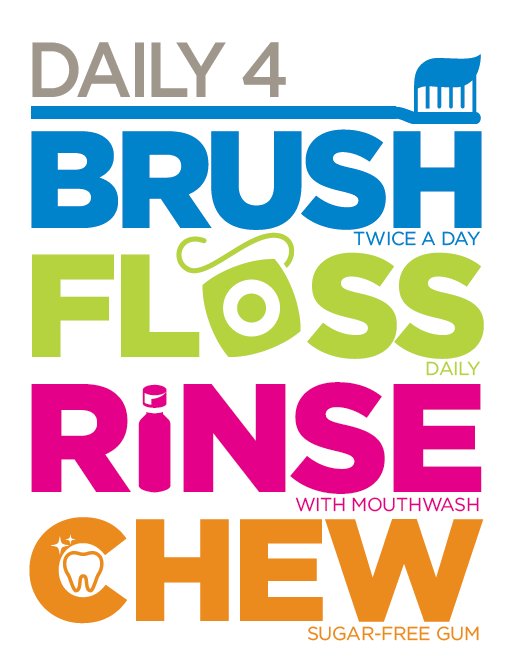 October is National Dental Hygiene Month, an effort to celebrate the work dental hygienists do and to help raise awareness on the importance of good oral health.
This year, the awareness month is focusing on four routines that can help people maintain healthy smiles: brush, floss, rinse and chew. According to MouthHealthy.org, the ADA’s consumer website, the ADA recommends brushing your teeth twice a day, for two minutes, with a soft-bristled brush.
Although recent news reports have questioned its benefits of cleaning between your teeth, it is still an essential part of taking care of your teeth and gums. The ADA recommends cleaning between your teeth once a day to remove plaque that is not removed by brushing. Plaque can eventually harden into calculus or tartar.
Because teeth alone account for less than half of the mouth, rinsing can help eliminate biofilm and bacteria that brushing and flossing cannot. Rinsing often, along with brushing and flossing, may help reduce the chance of dental decay and infection. However, avoid rinses that have alcohol in them.
Lastly, clinical studies have shown that chewing sugarless gum for 20 minutes following meals can help prevent tooth decay. The chewing of sugarless gum increases the flow of saliva, which washes away food and other debris, neutralizes acids produced by bacteria in the mouth and provides disease-fighting substances throughout the mouth.
Senior Citizens Day @ The Fair!
Monday, August 6, is Senior Citizens Day at the Bond County Fair in Greenville. The Bond County Senior Center is sponsoring activities scheduled from 10:00 a.m. – 3:00 p.m. including free games including BINGO, door prizes, entertainment, and health screenings. PLUS, the winners of the Adult Coloring Contest will be announced!
BCT Bus Schedule for Fair Week (August 2-7, 2018):
- GREENVILLE to FAIRGROUNDS FAIR SPECIAL
- 10:00 AM to 3:00 PM; call for pickup; normal curb to curb service, $1.00 round trip
- Parade Night 11:00 AM to 8:30 PM
- FARE DOES NOT COVER GATE ADMISSION CHARGE ($2 per person)
- Persons requiring the use of wheelchairs must make a reservation at least 48 hours in advance.
- For reservations or information call toll free: 1-800-252-9012 or 618-664-9844
Introducing the NEW Bond County Senior Center COLORING CONTEST!
We’re excited to bring you this FREE fun art event as part of Senior Day (Aug 6, 2018) at the Bond County Fair! Print, Color, Enter, Win!

- This is a skill based contest and chance plays no part in the determination of winning.
- Contest is open to anyone over 60 years of age.
- To enter, pick up coloring page at Bond County Senior Center or download from www.bondseniors.org (see links below). Pictures may be colored using any medium you like. Return entry to Bond County Senior Center at 1001 East Harris Ave., Greenville, Il. 62246. An entry form including your full name, age (at the time of entry), telephone number and address will be completed when entry is turned in. Any entries missing the above requirements will be immediately disqualified.
- Entries must be received by Bond County Senior Center no later than 3:00 pm on 7/31/2018. No other method of entry will be accepted.
- Limit one (1) entry per person.
- Entries will be judged by 3 judges from the community. The decisions of the judges will be final and binding in all respects.
- The prizes will be awarded at 1:00 pm on Senior Day at the Bond County Fair, 8/06/2018.
- Prizes: First Place $15.00, Second Place $10.00 and Third Place $5.00.
CLICK HERE to download the COMPLETE Contest Rules and Regulations.
Choose your coloring sheet below; download and print!
COLORING SHEET 1 (one)
COLORING SHEET 2 (two)
COLORING SHEET 3 (three)
COLORING SHEET 4 (four)
May is ALS Awareness Month
 Amyotrophic lateral sclerosis (ALS), or Lou Gehrig’s Disease, is a progressive neurodegenerative disease that affects nerve cells in the brain and the spinal cord. Motor neurons reach from the brain to the spinal cord and from the spinal cord to the muscles throughout the body.
The progressive degeneration of the motor neurons in ALS eventually lead to their death. When the motor neurons die, the ability of the brain to initiate and control muscle movement is lost. With voluntary muscle action progressively affected, patients in the later stages of the disease may become totally paralyzed.
Amyotrophic lateral sclerosis (ALS), or Lou Gehrig’s Disease, is a progressive neurodegenerative disease that affects nerve cells in the brain and the spinal cord. Motor neurons reach from the brain to the spinal cord and from the spinal cord to the muscles throughout the body.
The progressive degeneration of the motor neurons in ALS eventually lead to their death. When the motor neurons die, the ability of the brain to initiate and control muscle movement is lost. With voluntary muscle action progressively affected, patients in the later stages of the disease may become totally paralyzed.
ALS was first found in 1869 by French neurologist Jean-Martin Charcot, but it wasn’t until 1939 that Lou Gehrig brought national and international attention to the disease. Ending the career of one of the most beloved baseball players of all time, the disease is still most closely associated with his name.
Astrophysicist Stephen Hawking, whose ALS was diagnosed in 1963, has had ALS for over 50 years, the longest recorded time! No “brief history” there.
The non-profit group Project ALS announced its annual nationwide fundraiser, the Don’t Talk-a-Thon, taking place from April 10th through May 21st, 2017.
The Don’t Talk-a-Thon encourages participants, supporters, and donors to commit crucial funds for ALS research, culminating in a one-hour vow of silence on Sunday, May 21 to honor those who are robbed of their speech by this devastating disease. 100% of funds raised through the Don’t Talk-a-Thon go directly to Project ALS research.
You took the ALS Ice Bucket Challenge, vowed to be silent on Sunday, May 21st, now what? There are many exciting opportunities for you to be a part of the worldwide movement to find a cure for ALS!
Visit ALSA.org to find them! You can visit ALSWORLDWIDE.org too!
April is Parkinson’s Awareness Month
Parkinson’s disease is a movement disorder that is chronic and progressive, meaning that symptoms continue and worsen over time.
As many as one million individuals in the US live with Parkinson’s disease. While approximately four percent of people with Parkinson’s are diagnosed before the age of 50, incidence increases with age.
Its major symptoms vary from person to person, but can include tremor, slowness of movements, limb stiffness, and difficulties with gait and balance. The cause of the disease is unknown, and although there is presently no cure, there are treatment options such as medication and surgery to manage the symptoms.
Parkinson’s Awareness Month takes place each April and is a time to come together as a community to Stop Parkinson’s! Learn more and make a donation towards research and expert care at the National Parkinson Foundation.
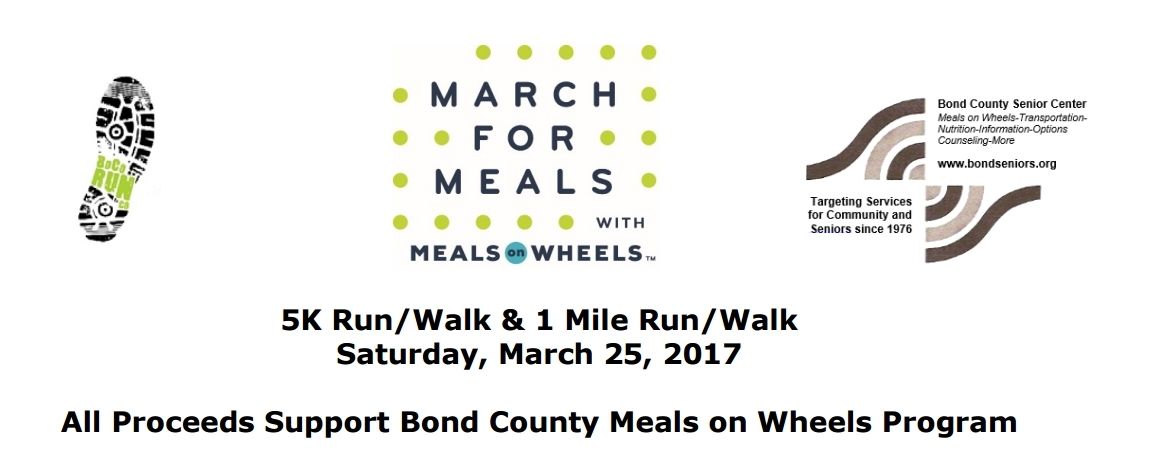
5K Run/Walk & 1 Mile Run/Walk on March 25, 2017
Bond County Senior Center & BondCoRunCo are having a 5k & 1 mile run/walk to benefit Bond County Meals on Wheels. 5k starts at 9:00 am and 1 mile at 9:45 am. Register by 3/17/17 to receive a t-shirt. $25 entrance fee.
Join The 15th Annual March For Meals Celebration!

Ways to March With Us...
Send a $$ donation to:
Bond County Senior Center
1001 East Harris Avenue
Greenville, IL 62246
Bond County Senior Citizens Center provides meals to homebound seniors & seniors who congregate at the center. These seniors are your neighbors, friends, teachers, parents and grandparents. We seek to get the word out & raise money for these nutritional programs.
Won’t you consider volunteering to help deliver meals or taking the pledge to end senior hunger by 2020?
February is National African American History Month

Black History Month, or National African American History Month, is an annual celebration of achievements by black Americans and a time for recognizing the central role of African Americans in U.S. history. The event grew out of “Negro History Week,” the brainchild of noted historian Carter G. Woodson and other prominent African Americans. Since 1976, every U.S. president has officially designated the month of February as Black History Month. Other countries around the world, including Canada and the United Kingdom, also devote a month to celebrating black history.
While African American history should be taught and explored throughout the year as part of American History, February’s Black History Month is the perfect time to investigate more deeply the struggles, challenges and achievements of African Americans.
So where to start? Go watch the empowering biographical film “Hidden Figures” again or for the first time! (or read the book by Margot Lee Shetterly!)
Next, read more at your local library or at the following websites, and search Google yourself for even more topics, stories, and achievements by Americans lesser studied but equally important!
National Park Service – African American Heritage
The History Channel - BHM Origins, Videos, Photos, Speeches
Smithsonian Education – Black History Month
National Endowment for the Humanities – Black History Month
2017 - January 16-20 is Healthy Weight Week

“It’s Not About A Number”
When it comes to weight loss, there’s no lack of fad diets promising fast results. But such diets limit your nutritional intake, can be unhealthy, and tend to fail in the long run.
The key to achieving and maintaining a healthy weight isn’t about short-term dietary changes. It’s about a lifestyle that includes healthy eating, regular physical activity, and balancing the number of calories you consume with the number of calories your body uses.
Staying in control of your weight contributes to good health now and as you age.
During Healthy Weight Week, hide your scale, do not peek at a height and weight chart, and avoid body mass index (BMI) calculations. Love yourself, love your body. Change your thinking and focus on these goals:
- Accept your weight and embrace who you are.
- Set realistic health guidelines for yourself.
- Focus on positive lifestyle changes.
- Appreciate yourself. Create positive relationships with family, friends, and food.
- Change your thoughts: Erase negative thoughts and begin positive self-talk: “I am beautiful.”
- Enjoy your eating experience by eating a variety of foods. Do not diet or obsess on food, weight, or calories. Eat when hungry, stop when full.
- Move your body. Enjoy a hobby or turn up the tunes and dance.
- Relax. Take time out for yourself.
If you enjoy Healthy Weight Week, don’t stop at one week, make lasting lifestyle changes forever! [Learn More Here.]
2016 - Give Local This December!

It’s Your community. Support the causes you care about. Local nonprofits are the lifeblood of our community, providing many crucial services that public agencies can no longer maintain. Giving back to local nonprofit organizations is very important – whether you give through volunteer time, money, or in-kind donations - it’s the right thing to do. Please do not hesitate to make a tax-deductible end-of-year donation gift this holiday season to Bond County Senior Center, Bond County Food Pantry or any local non-profit organization that touches your heart.
Tax Benefits and QCDs!
Qualified charitable distributions (QCD) from IRAs have been permanently extended. Individuals can donate up to $100,000/year directly from a traditional or Roth IRA to qualifying charities. This may provide tax benefits whether or not you itemize your deductions. The QCD can satisfy all or a portion of your required minimum distribution. Be sure to review the full rules and requirements before acting. And be sure to obtain a letter of acknowledgment from the charity.

Subaru partners with the Meals on Wheels Association of America (we are members) for grants to its members. Every year, they sponsor Subaru Share the Love.
The company donates $250.00 to one of five national charities (Meals on Wheels of America is one) for each car sold. By entering the program, we believe a minimum grant is available, but we are hoping for more. And it’s more than possible with your help! Donate directly to Bond County Senior Center’s Meals On Wheels program this holiday season, and we’ll pack it into our Share The Love Santa Sleigh, ready to share with the citizens and communities of Bond County that we serve.

Click the DONATE link and GIVE TODAY! Please specify in your payment note that your donation is intended for the Share The Love Sleigh drive. For more information about all methods of donation, please call the Senior Center at 618-664-1465.
November is American Diabetes Month
The vision of the American Diabetes Association is a life free of diabetes and all of its burdens. Raising awareness of this ever-growing disease is one of the main efforts behind the mission of the Association.
American Diabetes Month (ADM) is an important element in this effort, with programs designed to focus the nation’s attention on the issues surrounding diabetes and the many people who are impacted by the disease.
Here are just a few of the recent statistics on diabetes:
• Nearly 26 million children and adults in the United States have diabetes.
• Another 79 million Americans have prediabetes and are at risk for developing type 2 diabetes.
• The American Diabetes Association estimates that the total national cost of diagnosed diabetes in the United States is $245 billion.
American Diabetes Month takes place each November and is a time to come together as a community to Stop Diabetes! Read up on Diabetes and learn who is at risk and why. Some of the answers will surprise you!
It’s October, America, Let’s Do Lunch.
When you bring someone a meal, you show that you care.
Meals on Wheels volunteers deliver 1 million nutritious meals to seniors every day. Volunteers also provide safety checks and friendly visits – helping seniors to stay healthy and in their own homes.
With 1 in 6 seniors already facing the threat of hunger and the senior population projected to double by 2050, Meals on Wheels needs dedicated volunteers now more than ever. Donate your lunch break to volunteer with Meals on Wheels
and start making a difference in your local community.
September is Leukemia and Lymphoma Awareness Month & Childhood Cancer Awareness Month

One person in the United States is diagnosed with a blood cancer -- such as leukemia or lymphoma -- approximately every three minutes.
According to the American Cancer Society, an estimated combined total of 171,550 people in the US were expected to be diagnosed with leukemia, lymphoma, or myeloma in 2016.
Approximately every nine minutes, someone in the US dies from a blood cancer. This statistic represents approximately 160 people each day or more than six people every hour.
Leukemia, lymphoma and myeloma are expected to cause the deaths of an estimated 58,320 people in the US in 2016.
These diseases are expected to account for 9.8 percent of the deaths from cancer in 2016, based on the estimated total of 595,690 cancer deaths.
Leukemia remains among the most common types of cancer among children. In the U.S., almost 13,000 children under the age of 21 are diagnosed with cancer every year; approximately 1/4 of them will not survive the disease. A diagnosis turns the lives of the entire family upside down.
Leukemia, Hodgkin lymphoma, non-Hodgkin lymphoma (NHL), myeloma and myelodysplastic syndromes (MDS) are types of cancer that can affect the bone marrow, the blood cells, the lymph nodes and other parts of the lymphatic system.
The dramatic improvement in blood cancer treatment that began during the latter part of the 20th century is largely the result of chemotherapy. Several new drugs (and new uses for established drugs) have greatly improved rates of blood cancer cure and remission. People living with some types and stages of cancer may also benefit from treatment with radiation.
Every September The Leukemia & Lymphoma Society observes Blood Cancer Awareness Month as a way to raise awareness about blood cancers and the work LLS is doing to advance research to find cures and provide access to breakthrough treatments for blood cancer patients.
Since 1949, LLS has invested almost $1 billion in research to advance therapies and save lives. They are working everyday to provide resources and improve the quality of life for patients and their families.
Funding from everyday ordinary people is helping save lives not someday, but today. Click to learn more about helping LLS.
Help Strike Out Cancer with the Jason Motte Foundation and the St Louis Cardinals! Visit the organization website to learn more.
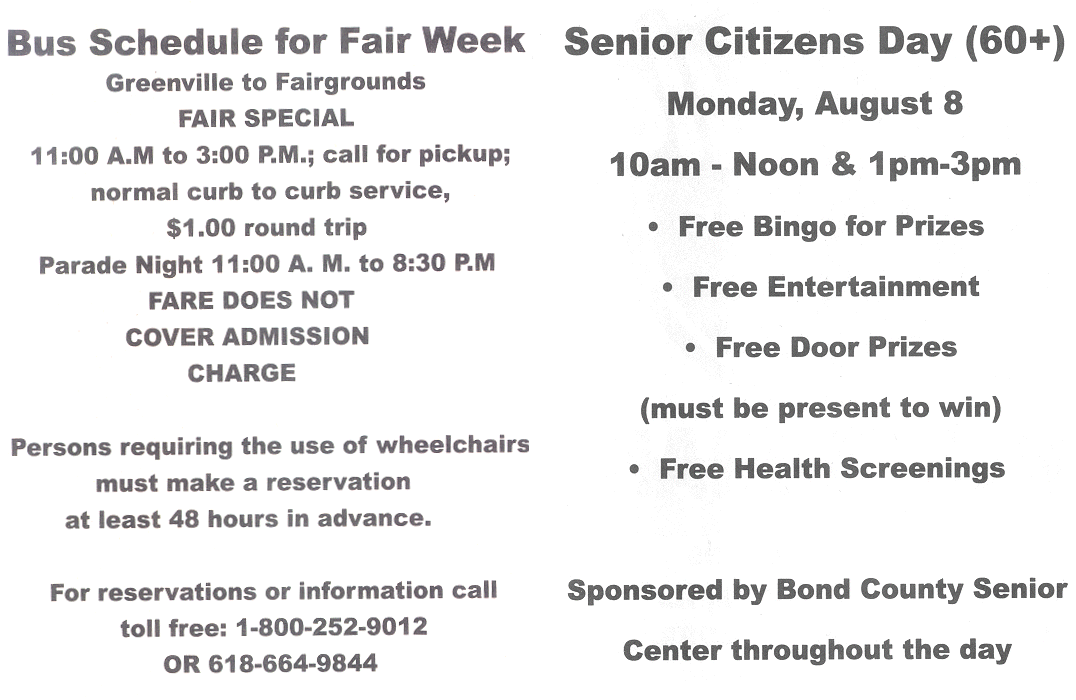
August 8 is Senior Citizen Day at the Fair!!
Monday, August 8 is Senior Citizen Day at the Bond County Fair for seniors ages 60 and older. Activities are scheduled from 10:00 a.m. – 3:00 p.m. and there will be free entertainment and free health screenings. Senior Citizen Day at the Fair is sponsored by the Bond County Senior Center.
July is Social Wellness Month
There are so many different aspects to health. We hear daily about eating right and exercising, but health also involves our social connections and interactions. With more people living alone or separate from extended family and friends, it is critical that we are as diligent about our social well being as we are about our physical well being.
July is Social Wellness Month and it reminds us that we need to reach out to others and build stronger social ties with family and friends. Social Wellness encourages us to develop better communications with those around us including the ability to share our feelings and needs. It involves respecting yourself and others and developing a solid social support system.
Social Wellness takes planning and effort to carve out time for those activities as they may not happen naturally in today’s hectic world. We know from our research that socially isolated people are more susceptible to illness and have a death rate two to three times higher than those who are not socially isolated. However people who maintain their social network and support systems do better under stress and are physically and mentally healthier. They even achieve higher grade point averages.
Some believe that one of the reasons that on-line social networking has taken off is because of our need to be connected. It is easy to admire the number of friends listed on your Facebook or Instagram page, but true social wellness also means that you carry out full conversations and not just reading status updates, photos, or posting the occasional ‘LIKE’. Try to think of these on-line connections as appetizers that prepare the way for full and meaningful relationships. They should make it easier for us to pick up the phone or invite our friends to dinner.
Beverly Beuermann-King’s Hot Tips For Celebrating Social Wellness Month:
- Reconnect with old friends, or reach out and try to develop new friendships. Are you letting yourself be open enough to allow others to approach you?
- Spend time really listening to other people. Find out what is important to them. What issues are they facing? Listening to someone else is one of the best things that we can do for them and it allows us to keep our own issues and challenges in perspective.
- Take the Social Assessment Quiz (CLICK HERE) to discover which areas you might need to work on.
June 13 is Weed Your Garden Day
Stay in Control of Your Plot!
National Weed Your Garden Day is celebrated annually on June 13. This day is set aside for all gardeners to take an extra 5 or 10 minutes while weeding their gardens.
One of the best gardening tips is to stay in control of your garden. Weeds grow fast, very fast and can soon become overwhelming. If you stay on top of them, it is much easier to maintain your garden. Weeding 5 or 10 minutes each day will make the job seem bearable and maybe even a little bit enjoyable and you will be in control and the weeds will not!!
Excessive and unwanted weeds will crowd out plant roots and steal the nutrients that are needed for the plants to grow nice and healthy.
Helpful tips on reducing weeds in your garden:
- Cover the soil along rows and between plants with mulch.
- Make sure to keep all weeds away from young plants.
- It is okay to plant your plants closely together to leave less room for weed growth.
- Have soil weed-free before planting.
- Make sure you do not let any of the weeds flower out.
- Keep the edges of your yard mowed low to lessen the invasion of weeds onto your property and into your garden.
- Enjoy your gardening, your weeding and your fresh produce and Happy National Weed Your Garden Day!
May is Celiac Awareness Month
Invisible Illness: Look Beyond The Surface
Celiac Awareness Month is an event held throughout the United States each May and is supported by Beyond Celiac (formerly the National Foundation for Celiac Awareness) (and other relevant organizations). This event raises awareness about celiac disease, and highlights the work of Beyond Celiac which provides support for those affected. Beyond Celiac, in collaboration with scientists and other organizations, also supports research into celiac disease.
Many People Are Not Aware They May Have Celiac Disease
In the United States, approximately 3 million people have celiac disease (that’s 1 in 133 Americans!); 21 million people have this disease or are sensitive to gluten. Of the 3 million who have this disease only 5% know they have it. This awareness event aims, in part, to make more people aware that they may have this disease and that by eating gluten free foods, they can eliminate their symptoms.
What Is Celiac Disease?
Celiac disease is a genetic autoimmune disease which damages the small intestine. The small intestine is part of the gut which digests & absorbs nutrients from food. When the small intestine is damaged, the rate of nutrient absorption from food is reduced. Celiac disease can affect people in many different ways and symptoms vary in severity. Due to the large number of possible symptoms, there are 3 recognized types of celiac disease.
- In many cases, where there are no noticeable symptoms, a person has ‘silent celiac disease’.
- People with ‘minor celiac disease’ have minor symptoms. These can include a wide range of symptoms such as indigestion, bloating, weight loss, and mild abdominal pain.
- People with ‘major celiac disease’ have severe symptoms which can be of great discomfort. These may include ‘minor celiac disease’ symptoms which are more severe, and other symptoms such as stomach cramps, diarrhea and muscle spasms.
People with celiac disease are sensitive to gluten which triggers these symptoms. Gluten is a protein found in grains such as barley, wheat and rye. Consumption of gluten can affect the whole body. Celiac Awareness Month also raises awareness about sensitivity to gluten.
Treatment for celiac disease and gluten intolerance is straight forward; those affected are advised to avoid foods which contains gluten. This awareness event helps educate and inform the public about gluten free foods. However, it is not always easy to determine if a food item is gluten free; this event also encourages appropriate labeling on food items.
Read more about Celiac Disease, Gluten, Advocacy, and Research at BeyondGluten.org.
April is National Kite Month
Fly a kite during National Kite Month.
Dedicated to the promotion and support of kiting, National Kite Month is a not-for-profit venture co-founded by the
American Kitefliers Association and the
Kite Trade Association International. Kite events around the
world help introduce people to the fun of kiteflying, the rich history of kites, the stunning artistry of kitemakers,
and how kites can be used as educational tools.
Read about 5 people who flew kites and changed history!
- Benjamin Franklin - Conducted lightning/electricity experiments and used wind power to pull along boats and sleds.
- Homan Walsh - Flew his kite across Niagara Falls gorge so engineers could built the first bridge span there.
- Alexander Graham Bell - Built the first sturdy, tetrahedron-celled, man-carrying kites.
- Wright Brothers - Built and studied kite designs before building their Wright Flyer machine.
- Paul Garber - Developed sophisticated kites for U.S. military target practice, collected an incredible kite collection for the Smithsonian Institution Air Museum, and also lobbied to remove anti-kite legislation in Washinton, D.C..
“Drink Prairie Farms Milk and Give to What Mooves You”

Bond County Senior Center is participating in Our Caps Your Cause by Prairie Farms. We are currently at 400 caps [as of Feb 24, 2016. We need your help to get us to 1,000 so we can get a check! You can peel the labels and enter the codes on the Prairie Farms website yourself, or you can drop them off at the senior center and we will enter them in. Help us get a donation from Prairie Farms just by saving your milk caps!
Thank you for your help and continued support! #ourcapsyourcause
Here’s the link to the website: www.prairiefarms.com/our-caps-your-cause.aspx
Join The March For Meals Celebration!

The month of March mobilizes hundreds of local Meals on Wheels programs across the country to reach out to their communities and build the support that will sustain them all year long.
Meals on Wheels programs collectively serve a nutritious meal, a warm smile and the safety check that keep over 2.5 million seniors a year healthy and living in their own homes.
This effort is a dynamic and effective partnership between the national network of local Meals on Wheels programs and the businesses, organizations, governments and volunteers who contribute so generously in their communities. Help us shore up the resources needed to make 2016 a year we can all be proud of.
The 14th annual March for Meals campaign is led by the Meals On Wheels Association of America and gives us all an opportunity to support our nation’s seniors in a variety of ways to make our communities stronger and healthier. So choose what’s right for you.
And, in doing so, know that your contribution will make a difference to, and touch the hearts of, your courageous aging neighbors.
Send a $$ donation to:
Bond County Senior Center
1001 East Harris Avenue
Greenville, IL 62246
Bond County Senior Citizens Center provides meals to homebound seniors & seniors who congregate at the center. These seniors are your neighbors, friends, teachers, parents and grandparents. We seek to get the word out & raise money for these nutritional programs.
Won’t you consider volunteering to help deliver meals or taking the pledge to end senior hunger by 2020?
February is National Senior Independence Month.
Helping Seniors Enjoy Their Independence.
February is Senior Independence Month. This is a good time to make sure that Seniors are living in spaces that work well for them.
The First Families were following a growing national trend in 2011. Both President Obama and Vice President Biden would be living with a parent in their homes. The aging of Baby Boomers and the demands of the current economic environment have driven an increase in multi-generational residences.
Another trend is for senior citizens to live independently in their own homes well into their eighties and nineties.
Whether living alone or with extended family, older adults may have specific needs and limitations that challenge them to evaluate how things are organized. Appropriately arranged space and access-friendly systems can greatly enhance independence for senior citizens whether they live alone or with others.
February is National Senior Independence Month. So it is a good time for seniors and those who love and care for them to take a look at their living quarters and determine if they are organized to promote independence.
Read on for a few things to look for when thinking about Home & Community Based Long-Term Care...
2016 - January is National Blood Donor Month.
In the US, most blood centers have difficulty keeping any more than a three-day supply of blood for transfusions. This means that the blood you donated last month is long gone.
The need for blood, platelets, and plasma is constant, but only three in every 100 Americans donate blood, coming together to donate 81 million units of blood annually.
Baby boomers currently account for the most blood donations, but they are rapidly reaching the age when medications and health issues bar them from being able to donate.
At the same time, they are the largest age cohort of the world population and require more donated blood for their own health, quickly using much of the supply they once supported themselves.
While some communities often have more blood than they need, others are constantly in need. The Red Cross has created a sharing program,
which gives surplus to communities in need; this is particularly important in the wake of disasters. Because of the short shelf life of blood, it is crucial that citizens create a habit of blood donation.
If you were to donate blood today, it could be separated into four components, helping to save multiple lives.
Please remind your younger friends and relatives over the age of 17 to consider donating their blood, platelets, and/or plasma.
Read more about donating today and find helpful tips for sharing a life-giving donation.
2015 - Happy Holidays This December
Give Local!
It’s Your Community. Support the causes you care about. Local nonprofits are the lifeblood of our community, providing many crucial services that public agencies can no longer maintain. Giving back to local nonprofit organizations is very important – whether you give through volunteer time, money, or in-kind donations - it’s the right thing to do. Please do not hesitate to make a tax-deductible end-of-year donation gift this holiday season to Bond County Senior Center, Bond County Food Pantry or any local non-profit organization that touches your heart.
Subaru partners with the Meals on Wheels Association of America (we are members) for grants to its members.
Every year, they sponsor Subaru Share the Love.
The company donates $250.00 to one of five national charities (Meals on Wheels of America is one) for each car sold.
By entering the program, we believe a minimum grant is available, but we are hoping for more. And it’s more than possible with your help!
Donate directly to Bond County Senior Center’s Meals On Wheels program this holiday season, and we’ll pack it into our Share The Love Santa Sleigh, ready to share with the citizens and communities of Bond County that we serve.
November is Family Stories Month & National Lifewriting Month
November starts out with crisper weather and ends with the gathering of family and friends around the table, which makes November the perfect month to start telling and saving family stories.
Family stories are tales about people, places, and events related to the members of our immediate family or their ancestors.
Family stories casually chatted about at the dinner table, or regaled again and again at family gatherings can parallel great epics or notable short stories.
The memorable stories of our lives and of others in our family take on special importance because they are true, even if everyone tells different versions of the same event.
These tales are family heirlooms held in the heart not the hand. They are a gift to each generation that preserves them by remembering them and passing them on.
The first step to collecting family stories is to become a good listener. Good listeners encourage great storytelling.
Visit this link for great tips about listening and interviewing to collect those family stories!
Memoirs
Writing a memoir helps you find your voice, tell your story, and reach out to others. You start thinking about your memories, moments that make you feel young again, wondering: what is the legacy I’m leaving behind?
What do I have to say that is unique to me? I want to offer the wisdom I’ve gleaned from my own life to help someone else.
You begin to think about writing a memoir!
When you write a memoir, you need to learn the skills to weave craft and truth. This may mean confronting different family stories from your own, interpreting memories and events that were life changing.
You want to find a way to witness and offer testimony to the significant events of your life that shaped you into who you are, and what you know. A memoir can connect you to others in a vibrant and real way - through story.
Visit the National Association of Memoir Writers for helpful resources like articles, audios, book lists, workshops, and coaching.
October is Breast Cancer Awareness Month
As you peruse the aisles of your favorite department store, you start to notice a trend: pink scarves, pink socks, pink shirts, and pink coffee mugs. Then pink blenders, pink vacuums, and is that a pink microwave?!? Ahh yes, the pink explosion is everywhere, and that can only mean one thing: October is upon us, and everyone is preparing for National Breast Cancer Awareness Month.
It is a reminder that there is a gruesome disease that is out to get second base. These sweet, pink pastels are there to nudge us, saying “hey, don’t forget to examine your breasts, get your doctor to check them out too, and schedule your mammogram.” After all, about 1 in 8 U.S. women, and 1 in 1000 U.S. men will develop invasive breast cancer over the course of their lifetime, and being proactive in this fight is crucial.
There are some guidelines, though. Keep Reading to find out more!
And for even more information, visit www.nationalbreastcancer.org
PLUS: Pink Ribbon Quilt Raffle benefitting Meals On Wheels Program! $5.00 per ticket. Only 200 tickets will be sold, then drawing will take place. Quilt donated by Betty Boehm in a Pink Ribbon Breast Cancer Awareness theme. Purchase your quilt raffle tickets now at Bond County Senior Center!
September is World Alzheimer’s Month
September 2015 will mark the fourth global World Alzheimer’s Month, an international campaign to raise awareness and challenge stigma. The theme for World Alzheimer’s Month 2015 is Remember Me. Alzheimer’s Disease International is encouraging people all around the world to learn to spot the signs of dementia, but also not to forget about loved ones who are living with dementia, or those who may have passed away.
The impact of September’s campaign is growing, but the stigmatisation and misinformation that surrounds dementia remains a global problem.
» Dementia is a term used to describe different brain disorders that affect memory, thinking, behaviour and emotion.
» Early symptoms of dementia can include memory loss, difficultly performing familiar tasks, problems with language and changes in personality. View the early symptoms.
» There is currently no cure for dementia, but a range of support is available for people with dementia and their carers.
» Dementia knows no social, economic, or ethnic boundaries.
» Alzheimer’s disease is the most common cause of dementia. Other causes include vascular disease, dementia with Lewy bodies and fronto-temporal dementia.
» There are currently estimated to be 44 million people worldwide living with dementia. The number of people affected is set to rise to over 135 million by 2050.
Dementia is often hidden away, not spoken about, or ignored at a time when the person living with dementia and their family carers are most in need of support within their families, friendship groups and communities. The stigmatisation of dementia is a global problem and it is clear that the less we talk about dementia, the more the stigma will grow. This World Alzheimer’s Month ADI encourages you to find out more and play your part in reducing the stigma and improving the lives of people with dementia and their carers in your community.
August is for Continuing Education and Personal Enrichment!
“Continuing and Community Education is all about providing classes, workshops and other learning opportunities to enrich lives. It has been noted that life-long learning is imperative to one’s personal health and intellectual growth. Continuing education is for active, curious, and continually learning adults, adolescents and children. Great opportunities are provided for people to get together and participate in programs designed to be socially rewarding, stimulating, and thought provoking. A variety of non-credit and credit classes and activities are offered on a monthly basis throughout the year. There are no exams, homework assignments or grades - just the opportunity to learn for learning’s sake,” states Kaskaskia College’s website. Read more about Lifelong Learning at KC.
Community outreach programs are offered throughout the Kaskaskia College District in both credit and non-credit areas:
» Non-credit offerings include a variety of programs that provide personal development in a number of skill areas such as musical instruments, health and wellness, and creative arts.
» Professional continuing education such as Teacher Re-certification and other professional continuing educational opportunities provide a service to area professionals.
» Customized classes for specific groups are also offered.
Residents who have attained the age of 60 are eligible to receive free tuition for KC’s Community Education classes. Some classes, however require a lab or supply fee which is not waived. Lab fees help cover the cost of any materials that will be used during the class. For age 60+, KC also extends a waiver of tuition and activity fees applicable to all baccalaureate and vocational courses (credit courses) for which Kaskaskia College receives funding on a per semester hour basis from the Illinois Community College Board. Read More about free tuition for 60+ at KC.
Southern Illinois University Edwardsville’s Office of Educational Outreach offers continuing education opportunities for everyone in Edwardsville, the Metro East and the Greater St. Louis area. You can benefit from all the resources of their University community, including their outstanding SIUE faculty and staff. Sign up for fun, stress-free non-credit leisure learning classes - including language classes, business and accounting programs, piano lessons, special programs for Lifelong Learners. Read More about SIUe’s continuing education programs.
Greenville College offers Adult and Graduate Study programs as well as free lectures, concerts, and chapel programs. Greenville College’s Ruby E Dare Library and Greenville Public Library can also help you enhance your knowledge and abilities and get more out of life. Whether you’re looking to take up a new hobby, get your household affairs in order or improve your health and wellness, personal enrichment courses, events and independent reading will help you attain your goals.
July is Park and Recreation Month
This July we’re celebrating 30 years of Park and Recreation Month and the enduring importance of parks and recreation for the world. From the start, parks were created to serve the people—to give them a place to appreciate nature, exercise, socialize and have fun.
This mission lives on and will continue to intensify into the future. This July, let’s celebrate the past, present and future of parks and recreation!
Parks are the cornerstone of nearly every community, serving millions of people as the places anyone can go to be active, live healthier, connect with nature and gather together. Parks and recreation make our lives and communities better. This mission lives on and will continue to intensify into the future.
According to a 2014 article in the International Journal of Environmental Research and Public Health, higher levels of green space were associated with lower symptoms of anxiety, depression and stress.
The Centers for Disease Control found that increased access to places for physical activity led to a 25.6 percent increase in people exercising 3 or more times per week.
Living close to parks and other recreation facilities is consistently related to higher physical activity levels for both adults and youth.
Bond County Senior Center organizes a free walking club for those age 50 and older, held on Tuesdays & Thursdays at 8:00 am. at Wait Park & Swimming Pool. Weather Permitting. Join us in July, National Park & Recreation Month!
June is Perennial Gardening Month
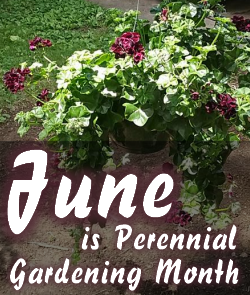
You can celebrate Perennial Gardening Month by discovering new perennials to plant in June. According to the Perennial Plant Association (PPA), at this time of year, gardeners can find mature specimens of favorite summer bloomers at their local garden center. They might also plant a “sequential-summer perennial display” of old and new cultivars.
The PPA also suggests that gardeners consider combinations that will make a “garden impact.” One combination with a long flowering period is ‘Perovskia atriplicifolia’ (Russian sage), Rudbeckia ‘Goldsturm’ (gloriosa daisy) and ‘Sedum Herbstfreude’ (Autumn Joy sedum).
The PPA suggests looking for new perennial ideas at your local botanical garden, arboretum or the display gardens at your local garden center. You may also consider participating in a neighborhood or city garden tour to study perennials and garden design.
April & May - The Little Christmas Village That Could
Kathy Kulhan of Greenville used her Christmas Village this past winter to raise much needed and appreciated funds for the Bond County Food Pantry. Donations she received totaled $160.00.
Below is what Kathy wrote to Anna Oestreich, executive director of the food pantry and Bond County Senior Center, inviting her to visit the miniature Christmas Village display on March 17, 2015 and personally accept the financial donation:
Many friends and neighbors have come to see it and have honored my “request” of an “Admission of 50 cents to $50.00.” :) Because of busy holidays and several illnesses, visitors are STILL coming this week, from Effingham, Springfield & even Greenville. I would like for you to be the last visitor before I begin packing it all away until the next time.
I think you had a great suggestion to put the story and a few pictures on your website. I hope it would encourage others to do something similar for the Food Pantry, and even try to "out-do me" with the amount of $$$ raised. :)
Thanks very much, Kathy
Anna Oestreich says, “I really enjoyed touring the village and visiting with Kathy and Bob. It was amazing - so much detail! It was a wonderful idea and it was so gracious of her to make it a benefit for the food pantry. I took [several] photos. I like the close-up and the train – magical!”


Join The March For Meals Celebration!
The month of March mobilizes hundreds of local Meals on Wheels programs across the country to reach out to their communities and build the support that will sustain them all year long.
Meals on Wheels programs collectively serve a nutritious meal, a warm smile and the safety check that keep over 2.5 million seniors a year healthy and living in their own homes.
This effort is a dynamic and effective partnership between the national network of local Meals on Wheels programs and the businesses, organizations, governments and volunteers who contribute so generously in their communities.
Help us shore up the resources needed to make 2015 a year we can all be proud of.
The 13th annual March for Meals campaign is led by the Meals On Wheels Association of America and gives us all an opportunity to support our nation’s seniors in a variety of ways to make our communities stronger and healthier.
So choose what’s right for you. And, in doing so, know that your contribution will make a difference to, and touch the hearts of, your courageous aging neighbors.
Send a $$ donation to:
Bond County Senior Center
1001 East Harris Avenue
Greenville, IL 62246
Bond County Senior Citizens Center provides meals to homebound seniors & seniors who congregate at the center. These seniors are your neighbors, friends, teachers, parents and grandparents. We seek to get the word out & raise money for these nutritional programs.
Won’t you consider volunteering to help deliver meals or taking the pledge to end senior hunger by 2020?
Feb 8 is The First International Day of Prayer and Awareness against Human Trafficking
2015 - January is National Slavery and Human Trafficking Prevention Month

Men, women, and children are sold into a $150 billion annual market for sex and labor. This is happening globally, and domestically;
in urban and suburban areas; in hotels, restaurants, and on street corners. Slavery is wrapped up in almost every industry’s supply chain,
tainting the food we eat, the clothes we buy, and the electronics we love. After the international drug trade, trafficking of humans is
tied with arms dealing as the second- largest criminal industry in the world. Human trafficking is the recruitment, transportation,
transfer, harboring or receipt of persons, by means of the threat or use of force or other forms of coercion, of abduction, of fraud,
of deception, of the abuse of power or of a position of vulnerability or of the giving or receiving of payments or benefits to achieve
the consent of a person having control over another person, for the purpose of exploitation.
Sex trafficking is often highlighted in the media but is not the primary form of modern-day slavery. Using coercion, violence and
deception, labor traffickers force victims to work against their will in industries that range from small mom-and-pop shops to enormous
mineral extraction camps for commodities such as gold. Some individuals enter into work agreements willingly but accrue enormous debt
to the trafficker in the form of food, shelter, documentation, and travel fees. The traffickers inflate these costs and tack on enormous
interest rates that condemn their new hires to a life of underpaid labor or slavery.
Traffickers can be strangers or acquaintances, family members or friends. The economic, physical and social vulnerability of most victims
makes them easy prey for traffickers, who lure them in with promises for a chance at a better life.
Invest in a world free of slavery. Read more at NotForSaleCampaign.org and SetFreeMovement.com
2014 - In December Subaru Partners with Meals On Wheels
Subaru partners with the Meals on Wheels Association of America (we are members) for grants to its members.
Every year, they sponsor Subaru Share the Love.
The company donates $250.00 to one of five national charities (Meals on Wheels of America is one) for each car sold.
By entering the program, we believe a minimum grant is available, but we are hoping for more. And it’s more than possible with your help!
Let us introduce our idea to you! The Subaru Share the Love Sleigh!
Since our volunteers drive about 1500 each month to deliver meals, we’d like to collect $1500 in December 2014, one dollar for each mile driven.
Click the DONATE page and GIVE ONLINE TODAY! Please specify in your payment note that your donation is intended for the Share The Love Sleigh drive.
As your donations come in, watch our virtual sleigh fly up and across the 1500 miles of holiday ribbon, through the Bond County village stars,
all the way to the top and to our goal of $1500!
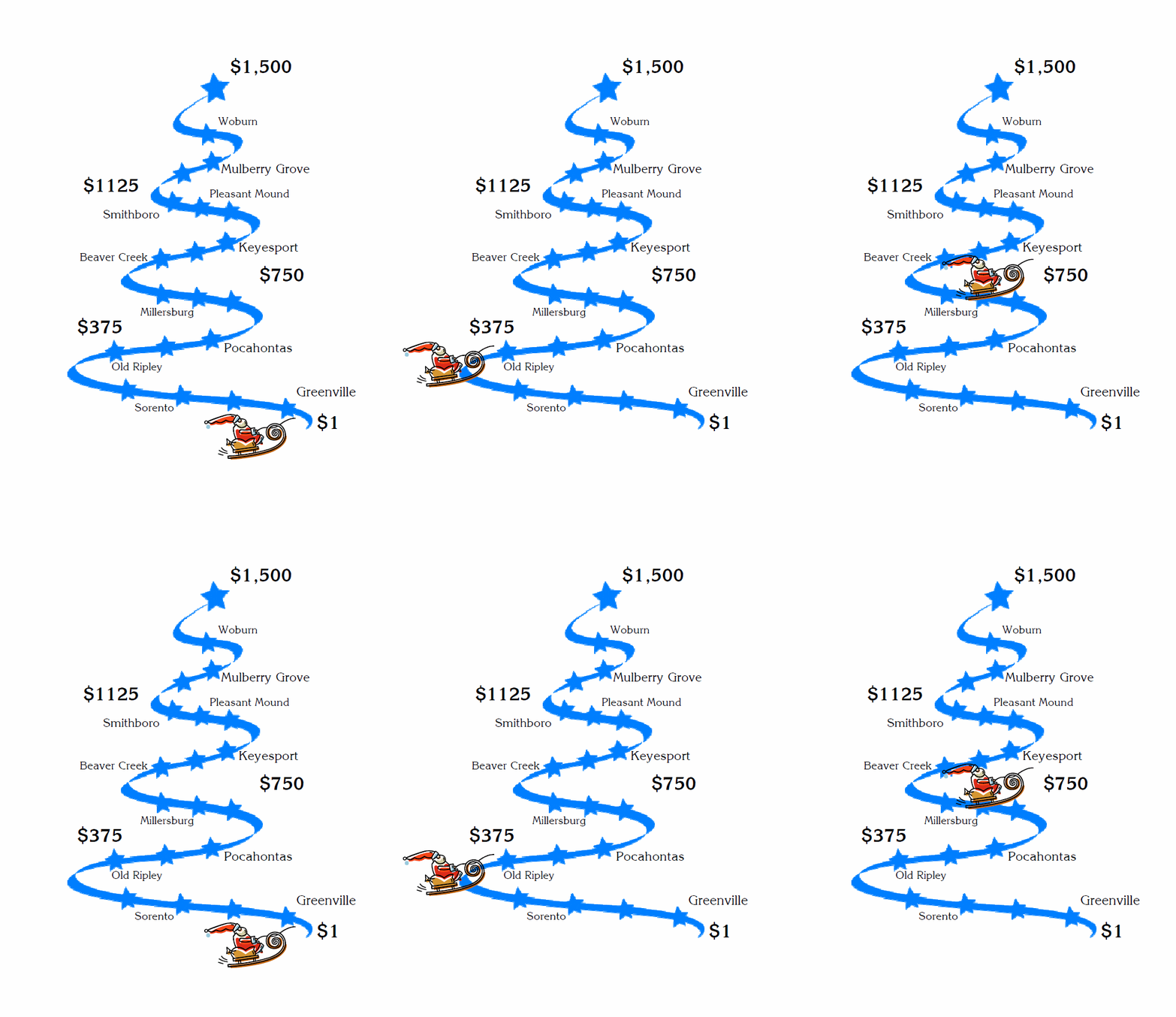
We’ve just begun raising money for Meals On Wheels this December.
Let’s push Santa’s Share the Love Sleigh to our top mini-goal marker of $1500!
November
Bond County Senior Center broke ground Thursday, June 5 for the Frank and Susan Watson Community Building. Fundraising for the project began last fall. Work on the addition began on Friday, June 6.
And now we are serving lunch in our new dining room and hosting the food pantry from the rear of the new wing!
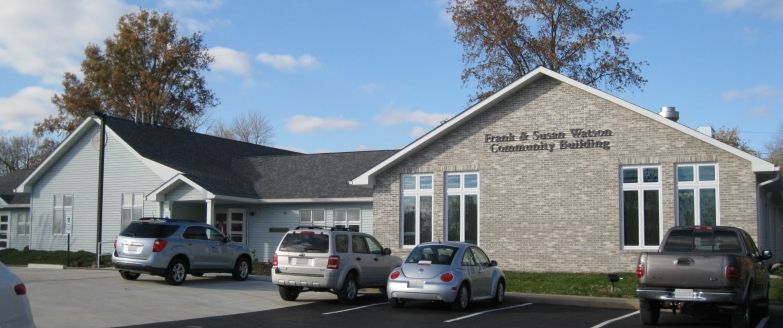
A short ceremony and ribbon cutting was held Saturday, November 8 to dedicate the new Frank & Susan Watson Community Building at the Bond County Senior Center.
Rev. Darryl Bolen, representing the Senior Center Board of Directors, and Anna Oestreich, Senior Center Director, presented a plaque to Susan and Frank Watson honoring their generosity and dedication to senior citizens.
Also honored were Bruce and Susan Meyer, who were also significant donors to the project.
The community building’s dining room is named in honor of Bruce’s mother and stepfather, Shirley and Foss Meyer. More honorees included Fred and Craig Baumberger, Duane and Linda and John Flowers as well as all the Bond County Senior Center Volunteers.
This addition doubles the space for services and activities, including a full kitchen, large dining room, and food pantry collection/distribution center. The capital campaign has steadily drawn closer to the goal of $650,000. You can still donate to the Bond County Senior Center Capital Campaign any time. Contributions can be sent to our location at 1001 East Harris Avenue in Greenville, Illinois. For more information, call the Center at 664-1465. We’ve supported positive aging for Bond County residents (of all ages!) since 1976 and we need your help now.
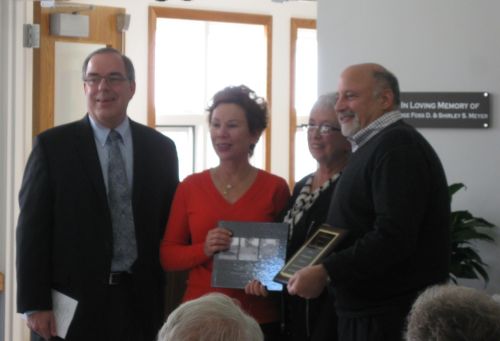
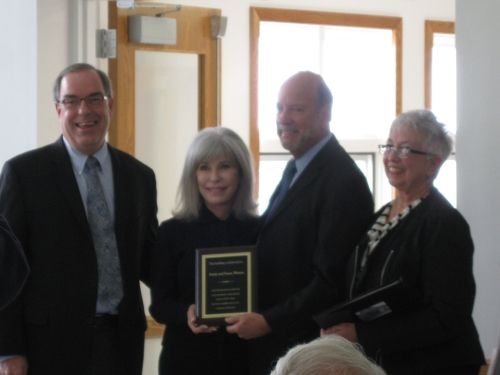
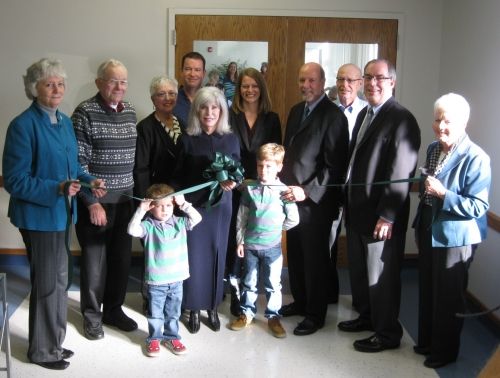
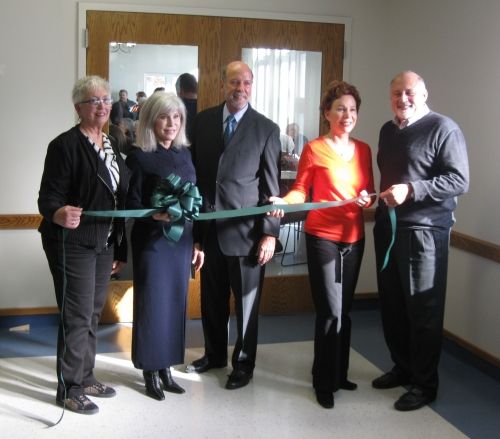
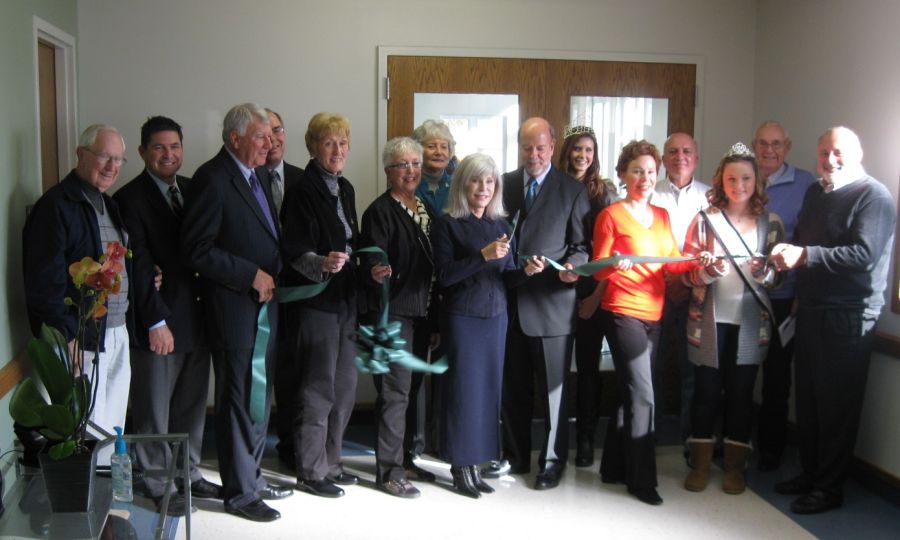
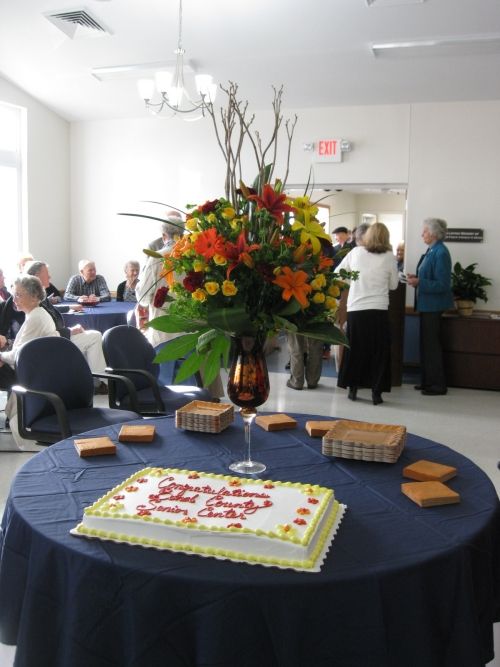
Below is a photo of the completed addition (on the right) taken November 8, 2014!
November is Aviation History Month

A celebration article by Gerry Wingenbach of flyertalk.com
Apparently we’ve been taking aviation for granted and we need a month dedicated to its history. They say it’s “an indispensable part of modern transportation” but “attracts less popular attention today” than at any time during the last 100-and-more years. Enter The Charles A. and Anne Morrow Lindbergh Foundation, whose offices sit in the foreground of Seattle sunsets over Bainbridge Island. They’ve posted an Aviation History Timeline. It’s worth considering.
To the Lindbergh Foundation, aviation began in 1783 when the French-born Montgolfier brothers built the first lighter-than-air balloon and sent brother Étienne (the youngest of 15 siblings) up for a ride. “Get in a supply of taffeta cloth and of cordage, quickly, and you will see one of the most astonishing sights in the world,” big brother Joseph told Étienne. Where would the world be without little brothers for test pilots? So on June 4, 1783, the Montgolfier brothers flew their balloon at its first public demonstration. The flight lasted 10 minutes while tethered around 6,000 feet. Not bad.
By 1900, the German Count Ferdinand von Zeppelin was flying a dirigible airship (long and cylindrical in shape, with a rigid framework). By 1910, Zeppelins were commercial aircraft. But in WWI, Zeppelins were used as bombers and scouts. After the war, they were in daily service between Berlin and Munich.
But the heydays for Zeppelins were the 1930s, when the airships Graf Zeppelin and Hindenburg operated regular transatlantic flights from Germany to North America and Brazil. (The art deco spire of the Empire State Building was designed to serve as a mooring mast for airships.)
But then there was that Hindenburg disaster in 1937 along with the rise of fixed-wing aircraft.

So let’s get back to 1903 when Orville and Wilbur Wright flew the first successful self-propelled airplane. Things started to happen quickly. By 1909, Louis Bleriot crossed the English Channel. Raymonde de Laroche became the first licensed female pilot in 1913.
Salim Ilkucan crossed the Sea of Marmara, Turkey, in 1918 achieving the longest over-sea flight. In 1920, the United States Post Office established airmail service. Bessie Coleman became the first licensed African-American aviator in the world in 1922.
In 1924, Charles Lindbergh bought his first plane (a war-surplus Curtiss Jenny), went barnstorming and enlisted as a U.S. Army Flying cadet. In 1926, the first flight around the world happened while Lindbergh made his first Chicago-to-St. Louis airmail flight.
Then came the feds. In 1927, the Air Commerce Act made the first federal attempt to set safety regulations for civil aeronautics and required the registration and of pilots and planes. And back came Lindbergh. In 1928, he made the first solo, nonstop transatlantic flight.
Three years later, his wife Anne Morrow Lindbergh became the first licensed female glider pilot in the United States.
In 1933, Amelia Earhart became the first female pilot to cross the Atlantic Ocean. In that same year, Boeing built the first of 75 Boeing 247s, an all-metal, twin-engine airplane that was the first modern passenger airliner.
It took the 247 “20 hours, with seven stops, to fly between New York and Los Angeles” at 189 mph. Some were still flying in the late 1960s.
After WWII, the sky got a lot busier. Technologies such as long-range missiles, computer systems, electronic controls, combustion chemistry and new composite structures were used by the aerospace industry. In 1953, Chuck Yeager broke the sound barrier.
By 1959, we’re talking space travel and the first American satellite to be placed in orbit, “Explorer 1”, is launched. Alan Shepard, in 1966, became the first American in space. Neil Armstrong walked on the moon and (kind of childlike and weirdly sweet) Buzz Aldrin hit a golf ball. In 1972, a Boeing 747 made its first commercial flight from New York to London. In 1974, NASA announced the shuttle program. And in 1976, Charles Lindbergh died in Maui and was buried at Kipahulu. In 1977, the Concorde took off. The 1980s and 1990s are best known for Space Shuttle flights.
Visit the National Aviation Hall of Fame in Dayton, Ohio.
Read more at The Aviation History Online Museum.
October is Domestic Violence Awareness Month
Domestic violence is best understood as a pattern of abusive behaviors–including physical, sexual, and psychological attacks as well as economic coercion–used by one intimate partner against another (adult or adolescent) to gain, maintain, or regain power and control in the relationship. Batterers use of a range of tactics to frighten, terrorize, manipulate, hurt, humiliate, blame, often injure, and sometimes kill a current or former intimate partner.
For more general information about domestic violence, including potential warning signs for emotional, physical, or sexual abuse, visit the National Domestic Violence Hotline’s information page: Is This Abuse? Get the Facts.
Break the Cycle also provides more information about patterns of abuse and behaviors commonly experienced by youth in dating relationships.

S.A.F.E. is a sexual assault center,
which serves Bond, Clay, Clinton, Effingham, Fayette, Jefferson, Marion, Washington and Wayne counties. This nonprofit agency provides services for sexual assault victims and their families regardless of their age, race, sex or sexual preference.
S.A.F.E.’s 24-hour Hotline Crisis Intervention 800-625-1414 or 618-283-1414
September is Leukemia and Lymphoma Awareness Month & Childhood Cancer Awareness Month
One person in the United States is diagnosed with a blood cancer -- such as leukemia or lymphoma -- approximately every four minutes.
According to the American Cancer Society, an estimated combined total of 1,638,910 people in the US were expected to be diagnosed with leukemia (47,150), lymphoma (79,190) or myeloma (21,700) in 2012.
Leukemia remains among the most common types of cancer among children. In the U.S., almost 13,000 children under the age of 21 are diagnosed with cancer every year; approximately 1/4 of them will not survive the disease. A diagnosis turns the lives of the entire family upside down.
Leukemia, Hodgkin lymphoma, non-Hodgkin lymphoma (NHL), myeloma and myelodysplastic syndromes (MDS) are types of cancer that can affect the bone marrow, the blood cells, the lymph nodes and other parts of the lymphatic system.
The dramatic improvement in blood cancer treatment that began during the latter part of the 20th century is largely the result of chemotherapy. Several new drugs (and new uses for established drugs) have greatly improved rates of blood cancer cure and remission. People living with some types and stages of cancer may also benefit from treatment with radiation.
Every September The Leukemia & Lymphoma Society observes Blood Cancer Awareness Month as a way to raise awareness about blood cancers and the work LLS is doing to advance research to find cures and provide access to breakthrough treatments for blood cancer patients.
Since 1949, LLS has invested almost $1 billion in research to advance therapies and save lives. They are working everyday to provide resources and improve the quality of life for patients and their families. Funding from everyday ordinary people is helping save lives not someday, but today. Click to learn more about helping LLS.
Help Strike Out Cancer with the Jason Motte Foundation and the St Louis Cardinals! Visit the organization website to learn more.
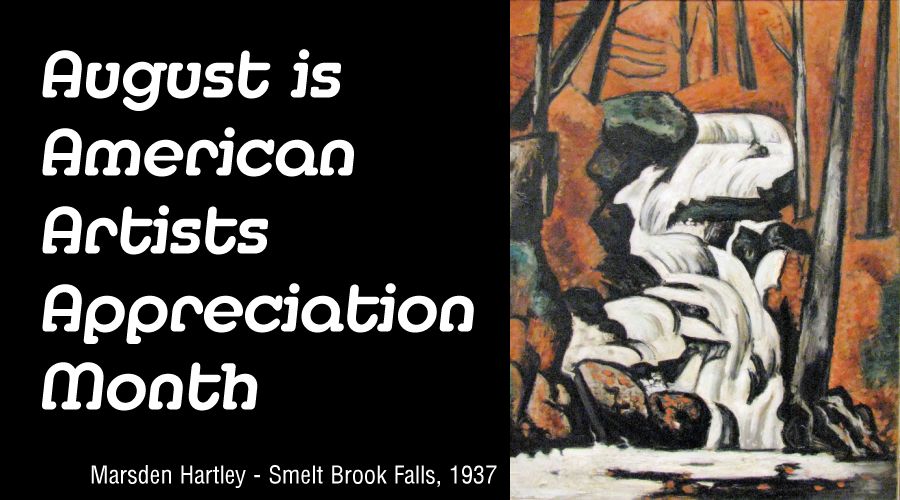
August is American Artist Appreciation Month
QUICK! Name an American artist!
Who was the first to pop into your head? Was it Norman Rockwell? For many of us, he’s the one we think of right away. But there are so many others that shouldn’t be forgotten.
From Andy Warhol, Marsden Hartley and Andrew Wyeth, to Georgia O’Keeffe and Mary Cassatt, America has been the birthplace for some of art history’s most talented and celebrated artists. Throughout August, all of them will be honored as we observe American Artist Appreciation Month.
But you don’t have to visit a museum to appreciate American fine art. Numerous books, magazines and websites showcase a variety of works by American artists, including Norman Rockwell. And the works of contemporary favorites such as Leslie Lew, Tim Yanke and Marcus Glenn, are also not to be missed.
So during the month of August, take a moment to learn more about American artists. You never know what you might discover. Visit the St Louis Art Museum in Forest Park or stick closer to home...
Find American Artists right under your nose in Greenville, Illinois!:
Richard W. Bock Sculpture Museum; 2Marthas Meetingplace, Gifts & Art;
Our Common Ground Summer Art Show and Annual Art Walk; iconic Robert Horsfall prints hanging in many offices and businesses; even our Downtown Building murals! How much more art can YOU discover?
“Your County, Your Center”
Bond County Senior Center broke ground Thursday, June 5 for the Frank and Susan Watson Community Building. Fundraising for the project began last fall. Work on the addition began on Friday, June 6.
.jpg)
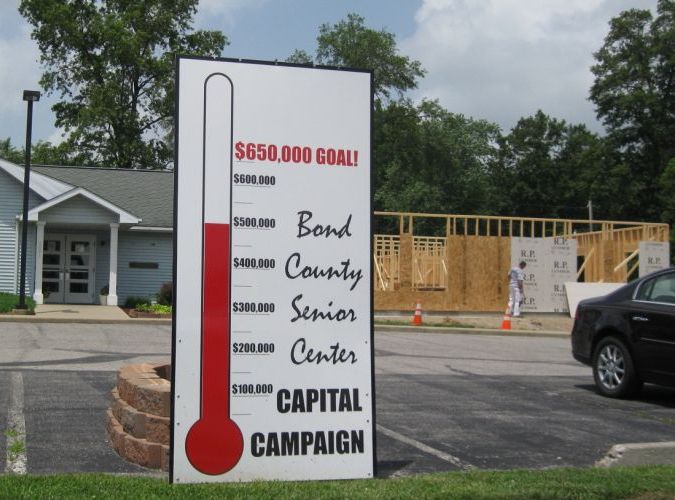
Groundbreaking Photo Credit Greenville Chamber Of Commerce, June 2014.
This addition will double the space for services and activities, including a full kitchen, large dining room, and food pantry collection/distribution center. The capital campaign has steadily drawn closer to the goal of $650,000. You can donate to the Bond County Senior Center Capital Campaign any time. Contributions can be sent to our location at 1001 East Harris Avenue in Greenville, Illinois. For more information, call the Center at 664-1465. We’ve supported positive aging for Bond County residents (of all ages!) since 1976 and we need your help now.
July is UV Safety Month

Skin cancer is the most common type of cancer in the United States. Ultraviolet (UV) rays from the sun are the main cause of skin cancer. UV damage can also cause wrinkles and blotchy skin.
The good news? Skin cancer can be prevented! Check your skin once a month for things that may be cancer. Skin cancer is rarely painful. Look for changes such as a new growth, a sore that doesn’t heal, or a bleeding mole.
Some sun can be good for you, but to keep your skin healthy, be careful.
Your skin changes with age. It becomes thinner, loses fat, and no longer looks as plump and smooth as it once did. Your veins and bones can be seen more easily. Scratches, cuts, or bumps can take longer to heal. Years of sun tanning or being out in the sunlight for a long time may lead to wrinkles, dryness, age spots, and even cancer. But there are things you can do to protect your skin and to make it feel and look better.
- Limit time in the sun. Don’t be fooled by cloudy skies. And you can also burn while under water.
- Use sunscreen. Use SPF 15 or higher and re-apply every 2 hours.
- Wear protective clothing - hat, sunglasses, loose long sleeves.
- Avoid tanning.
Make a difference: Spread the word about strategies for preventing skin cancer and encourage communities, organizations, families, and individuals to get involved. Click Here to read more!
June is National Get Outdoors Month
Some people can’t get enough time outdoors, surrounded by nature’s gifts and being refreshed by a world of green. Others need a little more nudging to get outside, and if there was ever a time to be encouraged to open up that door, it’s the month of June.
That nudging starts at the very top with President Obama proclaiming June as Great Outdoors Month, along with almost every state governor. The Presidential Proclamation urges all Americans to spend time in the great outdoors and to uphold our nation’s legacy of conserving our lands for future generations.
The Proclamation goes on to talk about the numerous opportunities for families and friends to explore, play, and grow together from hiking, walking a dog, camping and wildlife watching to canoeing, biking, running, hunting, fishing and playing in the neighborhood park, all activities that can help families and kids stay healthy, active and energized.
May is National Asthma and Allergy Awareness Month
Each year, the Asthma and Allergy Foundation of America (AAFA) declares May to be “National Asthma and Allergy Awareness Month.”
It’s a peak season for asthma and allergy sufferers, and a perfect time to educate your patients, family, friends, co-workers and others about these diseases.
Unfortunately, there is no place safe from allergies in America.
Important Dates
May 6 – World Asthma Day
May 11-17 – Food Allergy Awareness Week
What are allergies?
Allergies are an overreaction of the immune system to substances that usually cause no reaction in most individuals.
These substances could trigger sneezing, wheezing, coughing and itching. Allergies are not only bothersome, but many have been linked to a variety of common and serious
chronic respiratory illnesses such as sinusitis and asthma. Factors such as your family history with allergies, the types and frequency of symptoms, seasonality, duration
and even location of symptoms, either indoors or outdoors, are all are taken into consideration when a doctor diagnoses allergies. Common allergic diseases include:
allergic rhinitis, allergic asthma, food and drug allergies, insect sting/bite allergy, latex allergy, urticarial, atopic dermatitis, contact dermatitis, allergic conjunctivitis
and anaphylaxis. Allergy treatment is often based on the results of your allergy tests, your medical history, and the severity of your symptoms. It can include three different
treatment strategies: avoidance of allergens, medication options and/or immunotherapy (allergy shots).
The AAFA provides a list of simple things you can do to prevent allergies that include:
- Dust to control mites. By dusting surfaces and washing bedding often, you can control the amount of dust mites in your home.
- Vacuum often. Although cleaning can sometimes trigger allergic reactions, with dust in the air, vacuuming once or twice a week will reduce the surface dust mites.
- Wear a mask when doing housework and consider leaving for a few hours after you clean to avoid allergens in the air. You can also make sure your vacuum has an air filter to capture dust.
- Reduce pet dander. If you have allergies, you should avoid pets with feathers or fur like birds, dogs and cats. Animal saliva and dead skin, or pet dander, can cause allergic reactions. If you can’t bear to part with your pet, you should at least keep it out of the bedroom.
- Shut out pollen. One easy way to prevent pollen from entering your home is to keep windows and doors closed. Use an air filter and clean it regularly or run the air conditioner and change the filter often.
- Avoid mold spores. Mold spores grow in moist areas. If you reduce the moisture in the bathroom and kitchen, you will reduce the mold. Fix any leaks inside and outside of your home and clean moldy surfaces. Plants can carry pollen and mold too, so limit the number of houseplants. Dehumidifiers will also help reduce mold.
What is asthma?
Although asthma is sometimes tied to severe allergic responses it has also assumed a life of its own. According to the AAFA, asthma is defined as a disease in which the
airways become blocked or narrowed. These effects are most often temporary, but they can cause shortness of breath, breathing trouble and other symptoms. If an asthma episode
is severe, a person may need emergency treatment to restore normal breathing. It is estimated that approximately 20 million people in the United States have asthma. Asthmatic
episodes account for nearly 500,000 hospital stays each year. People with asthma can be of any race, age or sex. Its treatment costs billions of dollars annually. There still
remains much to be learned about what causes asthma and how to prevent it. Although it can cause severe health problems, in most cases treatment can control it and allow a
person to live a normal and active life.
Here are some considerations set forth by the AAFA that should be part of an asthma management plan:
- Identify and minimize contact with your asthma triggers. Any time you have an asthma episode, think about where you were and what you were doing in the past day or so. Answer questions like these: Was I making a bed or vacuuming? Was I near an animal? Cigarette smoke? Was I running, playing or exercising? Was I upset, excited or tired?
- Take your medications as prescribed. Asthma medicines are usually inhaled through a machine called a nebulizer, through a small device called a metered dose inhaler (also called an inhaler, puffer, or MDI) or through a dry powder inhaler (DPI).
- Monitor your asthma and recognize early signs that it may be worsening. Some people feel early symptoms, including: coughing, chest tightness, feeling very tired. But because airways to the lungs narrow slowly, you may not feel symptoms until your airways are badly blocked. The key to controlling your asthma is taking your medicine at the earliest possible sign of worsening.
- Know what to do when your asthma is worsening. If you understand your asthma management plan and follow it, you will know exactly what to do in case of an asthma episode or an emergency. If you have questions, ask your doctor.
For more information on allergy and asthma management, visit www.aafa.org
April is Prevention of Cruelty to Animals Month
Remember... We Are Their Voice.
According to the ASPCA, every ten seconds an animal is abused or beaten. In 2014, the ASPCA celebrates 148 years of fighting animal cruelty.
Recognizing cruelty is simple right? Not quite, say ASPCA experts. “It’s almost impossible to make conclusions based on a pet’s behavior alone” says the ASPCA Animal Behavior Center’s Kristin Collins, CPDT.
You are probably familiar with well-publicized animal cruelty cases BUT did you know:
- Untreated skin conditions that have caused loss of hair? That is animal cruelty.
- Pets are kept outside in inclement weather without shelter? That is animal cruelty.
- Your neighbor who doesn’t treat their diabetic cat? That is animal cruelty.
- Your co-worker who keeps his puppy in a crate 24 hours a day? That is animal cruelty.
“Reporting suspected animal cruelty ensures that animals in jeopardy receive prompt and often lifesaving care,” says ASPCA Special Agent Joann Sandano. “By making a complaint to the police or Humane Society in your area-you can even do so anonymously-you can help ensure that animals in need are rescued and that perpetrators of animal cruelty are brought to justice.” When you call to report animal cruelty, make sure to keep a careful record of whom you contact, date, and outcome of your discussion. If you witness the cruel act yourself, you can go to your local police commissioner and ask to swear out a warrant to summon the accused person to court.
Every year, the ASPCA urges supporters across the country to Go Orange for Animals throughout April. So, here are five ways you can Go Orange for Animals this month:
- Donate to an Animal Welfare organization, preferably your local humane society, animal shelter or wildlife rescue in your own city or county. First, research how the organization budgets its finances and try to donate only where your money will make the most direct impact in the lives of animals.
- Volunteer at your local animal shelter or rescue. If you’d like to make a difference in the lives of abandoned animals, volunteering at an animal shelter is one of the best ways that you can get involved. Providing animal care, cleaning kennels, walking dogs, fostering, grant writing, and participating in fundraising events are all activities that you can take part in as a volunteer.
- Learn more about the animal welfare organizations that are fighting for the welfare and conservation of animals. Read books and watch documentaries that raise awareness, promote the protection of animals and that celebrate the beauty and intelligence of animals. Also, continue learning how you can be a responsible and loving pet parent and how you can help others to do the same.
- Take Action. Make a personal vow to be a responsible pet parent, and to speak out against animal abuse. We are the voice of those who cannot speak so if you are a witness of animal cruelty or neglect, don’t hesitate to report it. Another way to take action is to be mindful of the products that you use, products such as cosmetics which are often tested on animals. Make a conscientious effort to be cruelty free.
- And finally, ADOPT a homeless animal from a shelter, spay/neuter your pets, and keep them vaccinated and safe. Bond County Humane Society in Greenville, Illinois is offering free spay/neuter this month for those skittish outdoor cats you might be feeding. Visit their website for their contact information to find out more!
March is National Brain Injury Awareness Month
According to the Brain Injury Association of America, each year an estimated 1.7 million children and adults in the United States sustain a traumatic brain injury (TBI), and another 795,000 individuals sustain an acquired brain injury (ABI) from nontraumatic causes. TBIs can affect the functionality of the brain—affecting thinking, reasoning, and memory. Whether the victim is an adult, a child, or an infant, TBIs can have a major impact on individuals and their families.
In recent years, the media has brought a spotlight to concussions and brain injuries in many professional sports leagues: NFL football, NHL ice hockey, MLB baseball, cycling, snowboarding and others. Children’s sports programs at community and school levels has also experienced greater conversation and concern. Those making decisions for athletes and leagues must decide on required and recommended protective gear, plus how and when to return a player to the sport following a suspected or diagnosed head injury. Ignoring the symptoms of an initial brain injury can result in worse subsequent trauma, post-concussion syndrome and even chronic brain disease.
To raise awareness of traumatic brain injury, the Brain Injury Association of America recognizes National Brain Injury Awareness Month every March. The NCTSN offers resources on traumatic brain injury for families, medical professionals, and military families. Read more at the Brain Injury Association of Illinois website...
February is Library Lovers’ Month

Library Lovers’ Month is a month-long celebration of school, public, and private libraries of all types. This is a time for everyone to recognize the value of libraries and to work to assure that the nation’s libraries will continue to serve.
Libraries are private, non-profit organizations that depend on the support of individuals, corporations, and foundations to help ensure that libraries remain free to the millions of people who visit in person or via the web each year. While government funding supports the basic operations of many of our nation’s libraries, there are still many more libraries that depend on contributions from private sources.
Greenville College Ruby E. Dare Library (including College Archives Department)
Greenville Public Library (including Bond County Genealogical Society Holdings)
Want to help your library but don’t know where to start?
- Contribute: Consider a tax-deductible gift to your library. Many libraries have memorial programs, endowments and other opportunities to support quality library services.
- Join the Friends of the Library, a support group of volunteers who provide fundraising and other assistance for many libraries. As a member, you will be kept informed of library funding issues. If there is no Friends group, start one. School, academic and special libraries can all benefit from such groups.
- Volunteer your time. Opportunities might include delivering reading materials to shut-ins, helping kids with homework after school or being a “grandparent” reader to preschool children.
- Promote: Research has shown that everyone loves libraries, but no one thinks about them very much. That’s where you come in. You don’t have to be a public relations expert to promote your library. You just have to talk about your library.
Keep Reading to find even more specific ways you can SHOW YOUR LOVE FOR LIBRARIES this February...
February
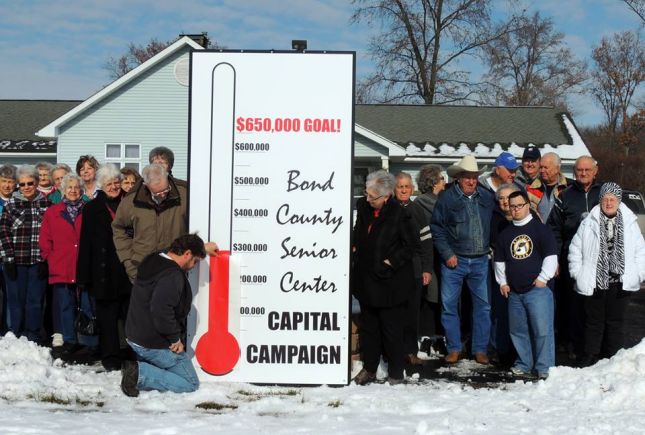
Dan Johnson of Johnson Signs & Designs turns the heat up on the fund raising thermometer at the Bond County Senior Center. The capital campaign for the Frank & Susan Watson Community Building addition has steadily drawn closer to the goal of $650,000.
This addition should include a full kitchen, large dining room, and food pantry collection/distribution center. You can donate to the Bond County Senior Center Capital Campaign any time. Contributions can be sent to our location at 1001 East Harris Avenue in Greenville, Illinois. For more information, call the Center at 664-1465. We’ve supported positive aging for Bond County residents (of all ages!) since 1976 and we need your help now.
Photo Credit Greenville Chamber Of Commerce, mid-December 2013.
2014 - January is National Hobby Month

Are you a coin collector? Are you fascinated with stamps? Do you like video games or board games or cooking or tennis or photography or sewing? We all have something we like to do with our free time, our hobbies...
It’s good to reflect at the beginning of the year about things you enjoy doing and what meaning those interests bring to your life. Are you devoting enough time to activities that inspire you and expand your mind? Taking up something new is always a good way to energize your life and reboot.
The first step is to figure out what your hobby actually is. Ask yourself what you enjoy doing, either as an individual or as a family, with friends or community. How does your interest fit in with your everyday life? Explore ideas by talking with other people about what they enjoy doing. Go on the internet and explore. Create a list of related activities to your current hobby, things that you’ve never considered before. It can open up whole new windows of opportunity.
The great thing about a hobby is that it always bears improving. Hobbies have far-reaching benefits beyond the exploration of something enjoyable. Pursuing a hobby provides an important emotional outlet, reducing everyday stress while providing opportunities for gaining knowledge. Hobbies keep our minds active and alert not to mention that physically oriented hobbies like walking, hiking and other forms of exercise can have great health benefits too.
Keep Reading to find out how to Expand your Horizons during National Hobby Month!
2013 - Happy Holidays This December
Give Local!
It’s Your community. Support the causes you care about. Local nonprofits are the lifeblood of our community, providing many crucial services that public agencies can no longer maintain. Giving back to local nonprofit organizations is very important – whether you give through volunteer time, money, or in-kind donations - it’s the right thing to do. Please do not hesitate to make a tax-deductible end-of-year donation gift this holiday season to Bond County Senior Center, Bond County Food Pantry or any local non-profit organization that touches your heart.

November is National Hospice/Palliative Care Month
In 1992, the month of November was designated to raise awareness of hospice and palliative care within the community.
During the month of November, hospices across the country are reaching out to raise awareness about important care issues for people coping with serious illness.
This month’s observance promotes greater awareness of hospice care and the advantages it offers; educates physicians and other health care professionals
about the concept of hospice; honors patients and family members, as well as the thousands of dedicated professionals and volunteers who devote their time, love and support to the
terminally ill and their families; and educates public officials to ensure hospice care remains a key components in the health care delivery system.
The criteria for hospice care is not always a terminal case, it is “failure to thrive”, so do not be afraid to look into it for a relative or friend who is not recovering from an injury or illness as quickly as he or she should be.
With extra personalized care, the patient could graduate out of hospice, back to a more normal life. To learn more about Hospice of Bond County, CLICK HERE.
November is American Diabetes Month
The vision of the American Diabetes Association is a life free of diabetes and all of its burdens. Raising awareness of this ever-growing disease is one of the main efforts behind the mission of the Association. American Diabetes Month® (ADM) is an important element in this effort, with programs designed to focus the nation’s attention on the issues surrounding diabetes and the many people who are impacted by the disease.
Here are just a few of the recent statistics on diabetes:
- Nearly 26 million children and adults in the United States have diabetes.
- Another 79 million Americans have prediabetes and are at risk for developing type 2 diabetes.
- The American Diabetes Association estimates that the total national cost of diagnosed diabetes in the United States is $245 billion.
American Diabetes Month takes place each November and is a time to come together as a community to Stop Diabetes! Read up on Diabetes and learn who is at risk and why. Some of the answers will surprise you!
October 2013 marks our first full month in our new location on East Harris Avenue!
But we’re not done yet! Soon we’ll be raising money to fund an addition to our new location that includes a full kitchen, large dining room, and food pantry collection/distribution center. You can get in on the ground floor by donating to the Bond County Senior Center Capital Campaign any time. We support positive aging for Bond County residents (of all ages!) and we need your help now.
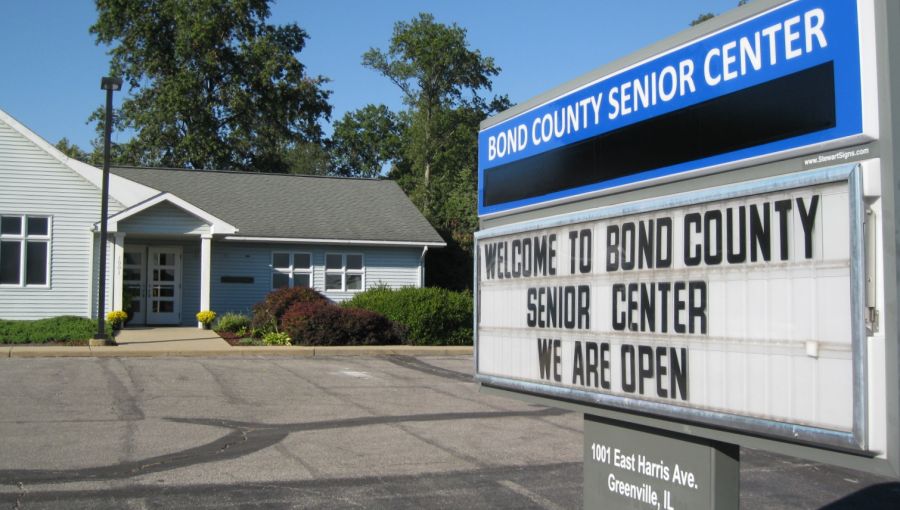
September is National Recovery Month
National Recovery Month is a national observance that educates Americans on the fact that addiction treatment and mental health services can enable those with a mental and/or substance use disorder to live a healthy and rewarding life. The observance’s main focus is to laud the gains made by those in recovery from these conditions, just as we would those who are managing other health conditions such as hypertension, diabetes, asthma, and heart disease. Recovery Month spreads the positive message that behavioral health is essential to overall health, prevention works, treatment is effective, and people can and do recover.
Recovery Month, now in its 24th year, highlights individuals who have reclaimed their lives and are living happy and healthy lives in long-term recovery and also honors the prevention, treatment, and recovery service providers who make recovery possible. Recovery Month promotes the message that recovery in all its forms is possible, and also encourages citizens to take action to help expand and improve the availability of effective prevention, treatment, and recovery services for those in need.
Bond County Senior Center and Bond County Health Department offer and host various services related to seeking help and/or treatment for many behavioral health issues. You can attend AA meetings, Weight Watchers meetings or Anger Management meetings. You can seek help quitting smoking and other substance abuses. You can find a therapist to help manage anxiety, bipolar disorder, obsessive compulsive disorder, depression, PTSD, ADHD, eating disorders and more.
September also marks Mold Awareness Month
... and many believe it is a great time to evaluate your home. Why should people be concerned with a little mold or mildew lying around the house? Studies have shown that there is an association between factors related to indoor dampness like, mold and mildew, and a wide variety of respiratory illnesses, including asthma, asthma exacerbation, respiratory infections, and upper respiratory tract symptoms such as cough, wheezing and dyspnea.
August is National Immunization Awareness Month
August is typically recognized as National Immunization Awareness Month (NIAM). This awareness month highlights the need for improving national immunization coverage levels and encourages all people to protect their health by being immunized against infectious diseases.
While CDC does not sponsor this month, CDC does support and encourage the efforts of state and local health departments and other immunization partners to celebrate NIAM and use this month to promote back to school immunizations, remind college students to catch up immunizations before they move into dormitories, and remind everyone that the influenza season is only a few months away. It’s a great reminder to our nation that people of all ages require timely immunization to protect their health.
You think vaccines are just for kids? Think again. Vaccines can help seniors avoid health complications.

If you’re over 65, vaccines can go a long way toward protecting you against complications that could land you in the hospital. Older people are far more likely than younger adults to suffer flu symptoms so severe they end up with pneumonia and can even die as a result.
Nonetheless, it seems many older Americans just aren’t aware how important some vaccines can be. Federal health officials recommend at least three immunizations for those over 65: shingles, flu and pneumonia. Shingles and pneumonia are one-time shots. Flu vaccines are recommended yearly.
A new report finds that more than 30 percent of older adults weren’t immunized against pneumonia in 2008. And only about one-third were immunized against the flu. The findings were released by the Trust for America’s Health, the Infectious Diseases Society of America, and the Robert Wood Johnson Foundation.
The report suggests several key reasons why adult vaccination rates remain low. For starters, most older adults do not live in institutionalized settings and may have limited access to doctors and health care settings. They may not have adequate information about the value of vaccines. Preventive care can be limited and people may be underinsured and out-of-pocket costs may be prohibitive.
Researchers say there should be a national strategy to increase the rate of adult vaccinations, including requiring full coverage for all vaccines recommended by the Centers for Disease Control and Prevention and increasing funding for public education about the importance of such vaccines.
Every year, the report says, millions of American adults go without routine and recommended vaccinations which leads to an estimated 40,000 to 50,000 preventable deaths, thousands of preventable illnesses and $10 billion in preventable health care costs.
You may also want to check with your state or local health department or immunization coalition to see if they have additional immunization resources you can use during NIAM or plans to celebrate the month.
July 21-27 is National Zoo Keeper Week

As the need to protect and preserve our wildlife and vanishing habitats has increased, the zoo keepers’s role as educators and wildlife ambassadors has become essential. During July, celebrate National Zoo Keeper Week; both they and their animals deserve the recognition.
Created by American Association of Zoo Keepers (AAZK), Inc, National Zoo Keeper Week is celebrated each year beginning on the third Sunday in July. During the week, zoos nationwide honor animal care professionals and the work they do in animal care, conservation, and education. There are approximately 6,000 animal care professionals in the United States.
Saint Louis Zoo: Animals Always

Summer Calendar of Events at your Saint Louis Zoo in Forest Park
“Zoo Parents” Program at your Saint Louis Zoo (excellent gift ideas for the animal lovers and future zookeepers you know!)
Zoo Keeping as a Career
“Zoo keeper” is a term used to describe an individual who cares for animals in zoological parks or aquariums. A career as a zoo keeper offers a unique opportunity in the specialized and demanding profession of maintaining captive exotic animals for conservation, research, public education and recreation.
Zoo keepers care for a diverse collection of animals from mammals and birds to reptiles and amphibians to fish and invertebrates. Some keepers become highly specialized, such as those who work in animal hospitals or who concentrate on a specific group of animals such as exotic birds, great apes, elephants or reptiles.
If you (or someone you know) are interested in becoming a zoo keeper, get a better idea of what this profession entails by reading up about the profession at Saint Louis Zoo’s website: CLICK THIS LINK.
June 21, 2013 is the First Day Of Summer!!

Free your toes and pick some strawberries!
Summer begins in the Northern Hemisphere on June 21, 2013, at 1:04 A.M. (EDT). Here’s more about the first day of summer–the summer solstice–plus, facts, folklore, and some sensational summer photos!
The Summer Solstice
Each year, the timing of the solstice depends on when the Sun reaches its farthest point north of the equator. This occurs annually on June 20 or June 21 in North America, depending on your time zone.
The word solstice is from the Latin solstitium, from sol (sun) and stitium (to stop), reflecting the fact that the Sun appears to stop at this time (and again at the winter solstice).
 In temperate regions, we notice that the Sun is higher in the sky throughout the day, and its rays strike Earth at a more direct angle, causing the efficient warming we call summer. In the winter, just the opposite occurs: The Sun is at its southernmost point and is low in the sky. Its rays hit the Northern Hemisphere at an oblique angle, creating the feeble winter sunlight.
The Sun is directly overhead at its most northern point at “high-noon” on the summer solstice, creating more sunlight in the Northern Hemisphere on this day then any other. See your local Sun rise and set times—and how the day length changes!
May is National Bike Month!
Sponsored by the League of American Bicyclists, National Bike Month is an opportunity to celebrate the unique power of the bicycle and the many reasons we ride. Whether you bike to work or school; to save money or time; to preserve your health or the environment; to explore your community or get to your destination, get involved in Bike Month in your city or state - and help get more people in your community out riding too!
Get Ready for Bike Month Bingo!
The League of American Bicyclists posted: “This winter, we were inspired by the Chasing Mailboxes blog, which challenged bicyclists to complete at least seven different errands by bike: the Errandonnee! That great idea got us thinking about National Bike Month - and all the different ways we enjoy biking in our daily lives. So we created a Bike Month Bingo card to challenge YOU to pedal somewhere new or use your bike in a different way.”
Download the Bingo card and stick it on your fridge or wall - and check the boxes as you ride. Once you’re done, share a picture of you with your completed card on the League’s Twitter feed (@Bikeleague) and you could win a prize!

April Is National Autism Awareness Month
Autism disorders (ASDs) affects nearly one percent of the children and one percent of adults in the United States. The estimated cost annually is $60 billion dollars.
In order to highlight the growing need for concern and awareness about autism, the Autism Society has been celebrating National Autism Awareness Month since the 1970s. The United States
recognizes April as a special opportunity for everyone to educate the public about autism and issues within the autism community.
Autism is a complex developmental disability that typically appears during the first three years of life and affects a person’s ability to communicate and interact with others. Autism is
defined by a certain set of behaviors and is a “spectrum disorder” that affects individuals differently and to varying degrees. There is no known single cause of autism, but increased
awareness and funding can help families today.
Asperger’s Disorder was first described in the 1940s by Viennese pediatrician Hans Asperger who observed autistic-like behaviors and difficulties with social and communication skills in
boys who had normal intelligence and language development. Many professionals felt Asperger’s Disorder was simply a milder form of autism and used the term “high-functioning autism” to
describe these individuals. Professor Uta Frith, with the Institute of Cognitive Neuroscience of University College London and author of Autism and Asperger Syndrome, describes
individuals with Asperger’s Disorder as "having a dash of Autism." Asperger’s Disorder was added to the American Psychiatric Association’s DSM-IV in 1994 as a separate disorder from
autism. However, there are still many professionals who consider Asperger’s Disorder a less severe form of autism.
Read More articles about Autism from the Huffington Post.
March is National Nutrition Month
.jpg "National Nutrition Month")
National Nutrition Month is a nutrition education and information campaign created annually in March by the Academy of Nutrition and Dietetics. The campaign focuses attention on the
importance of making informed food choices and developing sound eating and physical activity habits. Registered Dietitian Day, also celebrated in March, increases awareness of registered
dietitians as the indispensable providers of food and nutrition services and recognizes RDs for their commitment to helping people enjoy healthy lives.
The 2013 National Nutrition Month theme is “Eat Right, Your Way, Every Day.” Each March, the Academy encourages Americans to return to the basics of healthy eating through National Nutrition Month.
This year’s theme emphasizes the advantages of developing a healthful eating plan that incorporates individual food choices and preferences. This year marks the 40th anniversary of National Nutrition Month.
“There can be a misperception that eating healthfully means giving up your favorite foods,” said registered dietitian and Academy President Ethan A. Bergman. “Our ‘Eat Right, Your Way, Every Day’ National
Nutrition Month theme encourages consumers to include the foods they love as part of a healthful eating plan that is tailored for their lifestyles, traditions, health needs and, of course, tastes.”
Click the 2 links below to find out how you can Eat Right and Enjoy Eating Right:
February is National Bird-Feeding Month
Calling all wild bird lovers! The Wild Bird Centers of America (WBCA),
corporate supporter of the National Bird-Feeding Society (NBFS),
helps to promote National Bird-Feeding Month each February. The theme for 2013 is “Bringing Song and Color to Your Backyard”.
More information about National Bird-Feeding Month can be found on the society’s Facebook page.
Throughout the month of February, WBCA franchisees and dealers highlight the joys of bird feeding by providing tips and techniques to create a successful bird feeding and watching experience for their wild bird feeding and watching customers.
“While many of the Top Ten feeder birds can be found year round, others may only visit during spring and fall migration or during the breeding or wintering season,”
comments George Petrides, Sr., Managing Director of the NBFS and Founder of WBCA. The CEO of WBCA, George Petrides, Jr., adds “By providing the best bird seeds and
blends and feeders, bird baths, bird houses and making your yard safe for birds, you can enjoy America’s “most wanted” backyard birds almost anywhere in North America.”
 The Top Ten Backyard Birds east of the Rocky Mountains are the American Goldfinch, Chickadee (Black-capped and Carolina), Dark-eyed Junco, Downy Woodpecker,
House Finch, Northern Cardinal, Rose-breasted Grosbeak, Ruby-throated Hummingbird, Tufted Titmouse and White-breasted Nuthatch.
The Top Ten Backyard Birds east of the Rocky Mountains are the American Goldfinch, Chickadee (Black-capped and Carolina), Dark-eyed Junco, Downy Woodpecker,
House Finch, Northern Cardinal, Rose-breasted Grosbeak, Ruby-throated Hummingbird, Tufted Titmouse and White-breasted Nuthatch.
The Top Ten Backyard Birds west of the Rocky Mountains are the American Goldfinch, Black-headed Grosbeak, Chickadee (Black-capped and Mountain), Chipping Sparrow,
Dark-eyed Junco, Downy Woodpecker, House Finch, Pine Siskin, Rufous Hummingbird and White-breasted Nuthatch.
All of these beautiful wild birds can be viewed at WBCA’s on-line Backyard Birds Field Guides. With the exception of hummingbirds, which feed on nectar, these
Top Ten wild birds eat bird seed and many eat suet too.
“Whether you live in a rural, suburban or urban environment, there are always wild birds that can be attracted to your yard”, states Petrides, Jr.
“Having the right combination of food and feeders is the key to a successful bird feeding experience”.
2013 - January 20-26 is Healthy Weight Week
People who diet the first week of January binge the second and are ready for better living by the third week.
Healthy Weight Week is this week.
The 20th annual Healthy Weight Week is a time to celebrate healthy diet-free living habits that last a lifetime and prevent eating and weight problems.
Our bodies cannot be shaped at will. But we can all be accepting, healthy and happy at our natural weights.
In addition, January 22, Tuesday is Rid the World of Fad Diets & Gimmicks Day, 24th annual; and January 24, Thursday is Women’s Healthy Weight Day, 20th annual.
One of the most intriguing and potentially successful outlooks on “diet” and “fitness” could be a new trend on the rise called “Healthy Living At Every Size”.
Health At Every Size (also known as Health At Any Size) is a health-centered paradigm that focuses on total health and well-being, not weight.
It promotes active living, eating well without dieting, and a nurturing environment that includes respect and acceptance for people of all sizes. Read More by Clicking Here...
2012 December --
 November is National Epilepsy Awareness Month
Did you know? Approximately 1 in 26 Americans Will Develop Epilepsy at Some Point in their Lifetime.
The CDC writes: “Epilepsy, which affects approximately 2 million persons in the United States, is characterized by recurrent, unprovoked seizures.
Although epilepsy can occur at any age, the condition is more likely to begin among children aged less than 2 years and adults aged older than 65 years. Delayed recognition of seizures and subsequent inadequate treatment increases the risk for additional seizures, disability, decreased health-related quality of life, and, in rare instances, death.
Analysis of Behavioral Risk Factor Surveillance System data from 19 states indicated that approximately 1% of adults have active epilepsy, and many might not be receiving the best available medical care. As do many persons who live with other chronic disorders, those with epilepsy often face challenges related to medication schedules, management of symptoms, disability, lifestyle limitations, emotional stress, and stigma.”
It’s time to Get Seizure Smart! So read more by clicking here...
October is National Breast Cancer Awareness Month

Bond County Senior Center would like to remind women of all ages (and those people who care about any woman of any age) that there are multiple online and community resources to find out how to take charge of a woman’s own health. This message below is from NBCAM.org:
The National Breast Cancer Awareness Month (NBCAM) is a collaboration of national public service organizations, professional medical associations, and government agencies working together to promote breast cancer awareness, share information on the disease, and provide greater access to services.
Since its inception more than 25 years ago, NBCAM has been at the forefront of promoting awareness of breast cancer issues and has evolved along with the national dialogue on breast cancer. NBCAM recognizes that, although many great strides have been made in breast cancer awareness and treatment, there remains much to be accomplished.
Today, we remain dedicated to educating and empowering women to take charge of their own breast health.
Although October is designated as National Breast Cancer Awareness Month, NBCAM is dedicated to raising awareness and educating individuals about breast cancer throughout the year. We encourage you to regularly visit these sites to learn more about breast cancer, breast health, and the latest research developments.
Click HERE to find out more information from participating NBCAM websites...
September is Healthy Aging Month
Handy tips to consider for National Healthy Aging Month:
When is it too late to start “healthy aging”? According to Healthy Aging, a national health initiative, it’s never too late. September is National Healthy Aging Month, so why not start or improve your healthy lifestyle now? There are a number of things you can do to improve your physical, mental and even social health as you age.
- Save your eyes,
- Get regular exercise,
- Eat healthy foods,
- Keep your memory active,
- Stay socially active...
READ ON for more details about these quick tips!
And don’t forget! When temperatures rise so high in Bond County that a HEAT ADVISORY is issued, the Bond County Senior Center serves as a cooling center from 9:00 - 5:00 weekdays.
August is National Immunization Awareness Month
August is typically recognized as National Immunization Awareness Month (NIAM). This awareness month highlights the need for improving national immunization coverage levels and encourages all people to protect their health by being immunized against infectious diseases.
While CDC does not sponsor this month, CDC does support and encourage the efforts of state and local health departments and other immunization partners to celebrate NIAM and use this month to promote back to school immunizations, remind college students to catch up immunizations before they move into dormitories, and remind everyone that the influenza season is only a few months away. It’s a great reminder to our nation that people of all ages require timely immunization to protect their health.
You think vaccines are just for kids? Think again. Vaccines can help seniors avoid health complications.
If you’re over 65, vaccines can go a long way toward protecting you against complications that could land you in the hospital. Older people are far more likely than younger adults to suffer flu symptoms so severe they end up with pneumonia and can even die as a result.
Nonetheless, it seems many older Americans just aren’t aware how important some vaccines can be. Federal health officials recommend at least three immunizations for those over 65: shingles, flu and pneumonia. Shingles and pneumonia are one-time shots. Flu vaccines are recommended yearly.
A new report finds that more than 30 percent of older adults weren’t immunized against pneumonia in 2008. And only about one-third were immunized against the flu. The findings were released by the Trust for America’s Health, the Infectious Diseases Society of America, and the Robert Wood Johnson Foundation.
The report suggests several key reasons why adult vaccination rates remain low. For starters, most older adults do not live in institutionalized settings and may have limited access to doctors and health care settings. They may not have adequate information about the value of vaccines. Preventive care can be limited and people may be underinsured and out-of-pocket costs may be prohibitive.
Researchers say there should be a national strategy to increase the rate of adult vaccinations, including requiring full coverage for all vaccines recommended by the Centers for Disease Control and Prevention and increasing funding for public education about the importance of such vaccines.
Every year, the report says, millions of American adults go without routine and recommended vaccinations which leads to an estimated 40,000 to 50,000 preventable deaths, thousands of preventable illnesses and $10 billion in preventable health care costs.
You may also want to check with your state or local health department or immunization coalition to see if they have additional immunization resources you
can use during NIAM or plans to celebrate the month.
July is Bioterrorism and Disaster Education and Awareness Month
Think back to September 11th, the Tsunami, and Hurricane Katrina; you can never predict when a disaster will hit. That is why July marks the recognition of
Bioterrorism/Disaster Education and Awareness Month. The purpose of this month is clear: to raise awareness for emergency preparedness in case a disaster were to
hit. There are many different types of disasters, from natural disasters to bioterrorism, but whatever the emergency, it’s important to educate yourself to be
prepared. The American Red Cross has compiled a guide to educate people on the different types of disasters and how to prepare for them. Utilize resources both
online and off in order to educate and protect yourself and those you love in case of an emergency.
Throughout the month of July, take some time to sit down and discuss emergency procedures with your family and friends, and purchase first aid kits and stock up
on other preparatory items in case of a potential disaster. In the business world, some companies often provide these items and kits as giveaways during the month
of July in order to raise awareness for this critically important month. However you choose to observe it, make safety and preparedness a top priority this month
to prepare yourself and loved ones in case a disaster strikes.
Bioterrorism and Disaster Education and Awareness: Are You Prepared?
There are three simple steps the Red Cross encourages to conquer this conundrum: Get a Kit, Make a Plan and Be Informed. READ ON to learn more...
Emergency Preparedness and Response Information From The CDC:
Click For... Bioterrorism Emergency Preparedness and Response
Click For... Natural Disasters & Severe Weather Emergency Preparedness and Response
June is Great Outdoors Month
June is a special time to celebrate America’s Great Outdoors. Presidential recognition of Great Outdoors Week was begun in 1998 by then-President Clinton and has continued ever since. Since 2004, Presidential proclamation of Great Outdoors Month has come
annually, celebrating a variety of important events and actions that occur during the month. Great Outdoors Month highlights the benefits of active fun outdoors and our magnificent shared resources of forests, parks, refuges, and other public lands and waters.
Media attention to the proclamation triggers actions by millions of households and prompts public discussion of important issues linked to outdoor recreation, including volunteerism, health, and outdoor ethics.
Additionally, the majority of governors issue proclamations declaring June as Great Outdoors Month in their states, and many take further actions ranging from Governor’s Outdoor Conferences to hosting campouts for local kids on their state capitol grounds.
Read the State of Illinois’ proclamation of Great Outdoors Month 2012
Great Outdoors Month 2012 Activities
Great Outdoors Month is an excellent time to, well, get outdoors! Below is a list of the national events encouraging people to hike, fish, boat, camp, and get outdoors! Click on the day to be linked to the website.
National Trails Day, American Hiking Society: June 2
National Fishing and Boating Week, Take Me Fishing: June 2 - 10
National Get Outdoors Day, ARC & USDA Forest Service: June 9
Welcome to the Water on National Marina Day, Association of Marina Industries: June 9
Great American Backyard Campout, National Wildlife Federation: June 23
June 9 is also a fee free day at all National Parks, National Forests, National Wildlife Refuges, and BLM Lands.
The month of May includes many observances, including that of National Fibromyalgia Awareness Day (May 12), Cystic Fibrosis Awareness Month, Lupus Awareness Month, Celiac Awareness Month, National Stroke Awareness Month, ALS Awareness Month, Arthritis Awareness Month and Asthma Awareness Month.
Fibromyalgia (pronounced fy-bro-my-AL-ja) is a common and complex chronic pain disorder that affects people physically, mentally and socially. Fibromyalgia is a central nervous system illness and is also referred to as a syndrome rather than a disease. Unlike a disease, which is a medical condition with a specific cause or causes and recognizable signs and symptoms, a syndrome is a collection of signs, symptoms, and medical problems that tend to occur together but are not related to a specific, identifiable cause. Fibromyalgia, which has also been referred to as fibromyalgia syndrome, fibromyositis and fibrositis, is characterized by chronic widespread pain, multiple tender points, abnormal pain processing, sleep disturbances, fatigue and can be accompanied by psychological distress that comes with all chronic illinesses. For those with severe symptoms, fibromyalgia can be extremely debilitating and interfere with basic daily activities. Learn more from the National Fibromyalgia & Chronic Pain Association (NFMCPA).
Cystic fibrosis is an inherited chronic disease that affects the lungs and digestive system of about 30,000 children and adults in the United States (70,000 worldwide). A defective gene and its protein product cause the body to produce unusually thick, sticky mucus that: 1) clogs the lungs and leads to life-threatening lung infections; and 2) obstructs the pancreas and stops natural enzymes from helping the body break down and absorb food. In the 1950s, few children with cystic fibrosis lived to attend elementary school. Today, advances in research and medical treatments have further enhanced and extended life for children and adults with CF. Many people with the disease can now expect to live into their 30s, 40s and beyond. Learn more about the Symptoms and Treatments of Cystic Fibrosis and The Cystic Fibrosis Foundation.
Lupus is a chronic inflammatory disease that can affect various parts of the body, especially the skin, joints, blood, and kidneys. Chronic means that the signs and symptoms tend to last longer than six weeks and often for many years. In lupus, something goes wrong with your immune system, which is the part of the body that fights off viruses, bacteria, and germs (“foreign invaders,” like the flu). Normally our immune system produces proteins called antibodies that protect the body from these invaders. Autoimmune means your immune system cannot tell the difference between these foreign invaders and your body’s healthy tissues (“auto” means “self”) and creates autoantibodies that attack and destroy healthy tissue. These autoantibodies cause inflammation, pain, and damage in various parts of the body. Learn much more from The Lupus Foundation of America.
Celiac disease is an autoimmune disorder triggered by
the consumption of gluten, a protein found in wheat, barley and rye. Three million Americans have celiac disease, yet 95% of those who have it are
undiagnosed.
Learn more: 1) Celiac Disease Symptoms; 2) Celiac Disease Symptoms Checklist;
3) Testing & Diagnosis.
Stroke is the fourth leading cause of death in America and a leading cause of adult disability. Up to 80% of strokes are preventable; you can prevent a stroke! What is a stroke? A stroke or “brain attack” occurs when a blood clot blocks an artery (a blood vessel that carries blood from the heart to the body) or a blood vessel (a tube through which the blood moves through the body) breaks, interrupting blood flow to an area of the brain. When either of these things happen, brain cells begin to die and brain damage occurs. When brain cells die during a stroke, abilities controlled by that area of the brain are lost. These abilities include speech, movement and memory. How a stroke patient is affected depends on where the stroke occurs in the brain and how much the brain is damaged. Learn more from the National Stroke Association.
Amyotrophic lateral sclerosis (ALS), or Lou Gehrig’s Disease, is a progressive neurodegenerative disease that affects nerve cells in the brain and the spinal cord. Motor neurons reach from the brain to the spinal cord and from the spinal cord to the muscles throughout the body. The progressive degeneration of the motor neurons in ALS eventually lead to their death. When the motor neurons die, the ability of the brain to initiate and control muscle movement is lost. With voluntary muscle action progressively affected, patients in the later stages of the disease may become totally paralyzed. Discover 31 Ways to Fight ALS in 31 Days.
Arthritis can refer to several diseases and conditions. Osteoarthritis (OA), also called osteoarthroses or degenerative joint disease, is the most common type of arthritis. OA is a chronic condition characterized by the breakdown of the joint’s cartilage. The breakdown of cartilage causes the bones to rub against each other, causing stiffness, pain and loss of movement in the joint. Rheumatoid arthritis (rue-ma-TOYD arth-write-tis) is a chronic disease, mainly characterized by inflammation of the lining, or synovium, of the joints. It can lead to long-term joint damage, resulting in chronic pain, loss of function and disability. Juvenile arthritis (JA) refers to any form of arthritis or an arthritis-related condition that develops in children or teenagers who are less than 18 years of age. Approximately 294,000 children under the age of 18 are affected by pediatric arthritis and rheumatologic conditions. Find Resources, Research and Advocacy Events from the Arthritis Foundation.
Asthma and allergies are among the most prevalent and often overlooked diseases. One in five Americans suffer from all types of allergies. Over 24 million Americans report having asthma. Asthma and allergies are leading causes of hospital emergency visits, lost work and school days, and medical expenses. Thousands die each year from asthma. Learn more about Asthma. Learn more about Allergies.
April is National Kite Month
March 31st - May 6th, 2012
Fly a kite during National Kite Month.
Dedicated to the promotion and support of kiting, National Kite Month is a not-for-profit venture co-founded by the
American Kitefliers Association and the
Kite Trade Association International. Kite events around the
world help introduce people to the fun of kiteflying, the rich history of kites, the stunning artistry of kitemakers,
and how kites can be used as educational tools.
Read about 5 people who flew kites and changed history!
- Benjamin Franklin - Conducted lightning/electricity experiments and used wind power to pull along boats and sleds.
- Homan Walsh - Flew his kite across Niagara Falls gorge so engineers could built the first bridge span there.
- Alexander Graham Bell - Built the first sturdy, tetrahedron-celled, man-carrying kites.
- Wright Brothers - Built and studied kite designs before building their Wright Flyer machine.
- Paul Garber - Developed sophisticated kites for U.S. military target practice, collected an incredible kite collection for the Smithsonian Institution Air Museum, and also lobbied to remove anti-kite legislation in Washinton, D.C..
March is Red Cross Month
Support the American Red Cross
March is Red Cross Month, a time to remind everyone of the work of the American Red Cross in communities across the country and around the globe - and how we depend on public support to help people in need.
The American Red Cross was created in 1881 by Clara Barton and officially chartered by Congress in 1900 to provide national and international relief during disasters, and to give relief to the military and serve as a means of communication between members of the Armed Forces and their families.
From the beginning, people in this country have volunteered and donated funds to support the Red Cross in its mission to provide relief to victims of disaster and help people prevent, prepare for and respond to emergencies.
In 1943, President Franklin D. Roosevelt proclaimed the first Red Cross Month in support of Red Cross fundraising efforts to respond to needs brought on by World War II. Since that time, every president, including President Obama, has designated March as Red Cross Month.
Today, the American Red Cross responds to nearly 70,000 disasters a year, providing shelter, food, emotional support and other necessities to those affected. Through a worldwide network, the American Red Cross provides 24-hour support to members of the military, veterans and their families - in war zones,
military hospitals and on military installations around the world. Red Cross Blood Services collects and distributes more than 40 percent of this country’s blood supply. And, more than 9 million people across the United States receive American Red Cross training in first aid, water safety and other skills every year.
Thanks to the generous support of people in this country, the American Red Cross is able to mobilize to help people in need. The Red Cross is not a government agency, but relies on donations of time, money and blood to do its work.
Your generosity helps provide life-changing and often lifesaving services down the street, across the country and around the world. Show your support during Red Cross Month because moments of hope are made possible by people like you. Visit RedCross.org To find out how to donate your time, money, and/or blood!
February is American Heart Month

February is upon us and once again hearts are the theme. Little pink, red, and white hearts decorate checkout lines, greeting
cards, and of course, the confectionery aisle. Hearts and chocolate do go so well together, don’t they?
While we’re celebrating love, it’s also the perfect time to focus on our heart health as the American Heart Association, or AHA,
kicks off American Heart Month.
Heart disease remains the number one killer in the United States each year. Every 25 seconds, someone in the United States
suffers a heart attack.
Once thought of as a man’s disease, we now know that heart disease is an equal opportunity killer. It prematurely takes the
lives of more women each year than all cancers combined.
Believing that these statistics are unacceptable, the mission of the AHA is simple -- “To build healthier lives, free of heart
disease and stroke.”
One of the initiatives sponsored by the AHA to further the goal of a world free of heart disease and stroke is the Go Red for
Women initiative.
A national endeavor, Go Red for Women is uniquely focused on educating women about heart disease, their personal heart health
risk, and how they can take charge and empower themselves to build a different heart healthy future.
For more information about American Heart Month and the National Wear Red Day, visit www.empowher.com/heart-disease
and the American Heart Association.

February is also Responsible Pet Owners’ Month
Visit eHow.com to find out How to Participate in Responsible Pet Owner Month. And Spread the word - Let all of your friends and family know that it’s Responsible Pet Owner Month.
2012 - January is National Glaucoma Awareness Month
Today, more than 2.2 million Americans age 40 and older have open angle glaucoma, the most common form of glaucoma. At least half
don’t even know they have it. Glaucoma is a leading cause of blindness in the world, second only to cataracts, and the leading
cause of blindness in African-Americans. According to research funded by Prevent Blindness America, glaucoma costs the U.S.
economy $2.86 billion every year in direct medical costs for outpatient, inpatient and prescription drug services.
As part of January’s National Glaucoma Awareness Month, Prevent Blindness America is joining with other leading eye health
organizations in encouraging everyone to educate themselves on the disease as well as make a New Year’s resolution to make eye
health a priority.
Glaucoma has long been termed the “sneak thief of sight” because it slowly takes away vision, often without the patient even
realizing it. Glaucoma damages the optic nerve which sends information from the eyes to the brain. When the optic nerve is
damaged, peripheral vision begins to diminish. If left untreated, over time, glaucoma may also damage central vision.
Unfortunately, once symptoms are detected, the effectiveness of treatment diminishes. Once vision is lost, it cannot be
restored.
Risk factors for glaucoma include advancing age, family history, nearsightedness, eye injury or surgery and the use of steroid
medications. Race is another major risk factor as, according to the National Eye Institute, glaucoma is five times more likely
to occur in blacks than in whites and blacks are four times more likely to go blind from it. Hispanics are more likely to
develop glaucoma after age 60 than any other group.
Prevent Blindness America provides free resources to educate consumers on glaucoma, including treatment options and general
information at “The Glaucoma Learning Center,” a free website at www.preventblindess.org/glaucoma. Free printed materials are
available by request including the “Guide for People with Glaucoma.” This comprehensive booklet serves as a handbook for patients
and includes information on what to expect during treatment and even a list of questions to ask the eye doctor.
The Glaucoma Learning Center also hosts the “Glaucoma Web Discussion Forum” that allows patients and caregivers the opportunity
to discuss online all subjects related to the disease. Topics range from general information on the condition and its treatment,
to shared experiences and emotional support.
For more information about glaucoma and its treatments, visit PreventBlindness.org/glaucoma.
2011 - Happy Holidays This December
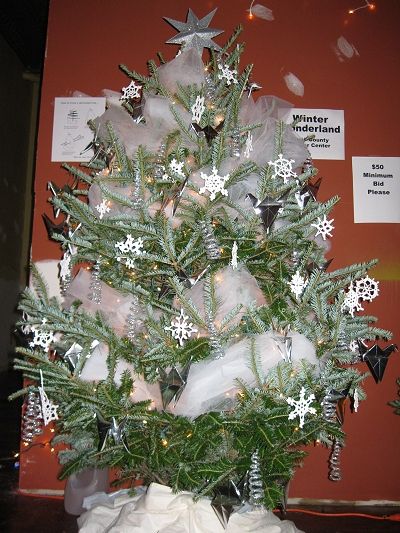
Bond County Senior Center participated in the Greenville Business & Professional Association’s Come Home For Christmas on November 25, 2011.
The Center entered a decorated tree into the non-profit Christmas Tree Auction Wonderland where a Silent Auction was held to raise money for every charity organization who decorated a tree.
The auction winners from the community got to take home their creatively decorated trees at the end of the night.
The Senior Center’s beautiful tree was decorated in a Winter Wonderland theme with tinsel spiral tree ornaments, foil origami birds, lace snowflakes, twinkle lights and garland of gauzy tulle.
If you missed Come Home For Christmas or the bidding at the Tree Auction, please do not hesitate to still make a tax-deductible donation gift this holiday season to Bond County Senior Center,
Bond County Food Pantry or any local non-profit organization that touches your heart.
Veterans Day is November 11th
Veterans Day is an annual United States holiday honoring military veterans. It is a federal holiday that is observed on November 11.
It is also celebrated as Armistice Day or Remembrance Day in other parts of the world and falls on November 11, the anniversary of the
signing of the Armistice that ended World War I. (Major hostilities of World War I were formally ended at the 11th hour of the 11th day
of the 11th month of 1918 with the German signing of the Armistice.)
The U.S. President Woodrow Wilson first proclaimed an Armistice Day for November 11, 1919. In proclaiming the holiday, he said:
“To us in America, the reflections of Armistice Day will be filled with solemn pride in the heroism of those who died in the
country’s service and with gratitude for the victory, both because of the thing from which it has freed us and because of the
opportunity it has given America to show her sympathy with peace and justice in the councils of the nations.”
October is Fire Prevention Month
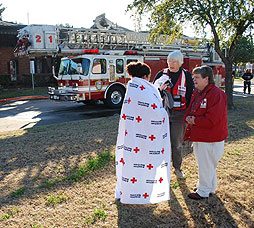
October is Fire Prevention Month and the American Red Cross is encouraging people to take steps to lessen the risk of a fire in their home.
According to the National Fire Protection Association, there are between 350,000 and 400,000 house fires in the United States every year. Home fires are the biggest disaster threat to families in this country, above floods and hurricanes.
That’s why the American Red Cross is encouraging people to remember two key fire safety steps: installing smoke alarms and developing a fire escape plan.
Additional recommendations include:
- Keep matches and lighters away from and out of reach of children.
- Don’t leave the kitchen, and don’t leave the home while you’re frying, grilling or broiling food.
- Once you are out, stay out! Call the fire department from a neighbor’s home.
During Fire Prevention Month, visit www.redcross.org for more steps people can take to lessen the chance of a fire in their home.
September is National Gynecologic Cancer Awareness Month and September 19-25, 2011 is Prostate Cancer Awareness Week

From www.cdc.gov/cancer/gynecologic: “In the United States in 2007, 80,976 women were told that they had a gynecologic cancer, and 27,739 died from a gynecologic cancer.
CDC provides information and educational materials for women and health care providers to raise awareness about the five main gynecologic cancers (cervical, ovarian, uterine, vaginal, and vulvar).”
Find resources about women’s reproductive health and symptoms here and here, or do your own web search or
talk to your friends, mother, sisters, daughters about their experiences to find out how and where you will seek advice or testing.
Also, it is very important to develop a good relationship with a doctor while you are healthy, so that if or when you find out you are sick, you have a trusted head start to begin treatment options.
From www.pcaw.org: “Did you know that a man is 33% more likely to get prostate cancer than a woman is to get breast cancer? It’s true.
A husband, father, son, brother, grandfather, friend dies every 17 minutes of every day from Prostate Cancer.
Are you a male 40-75 or over 35 and African American or your father or brother had Prostate Cancer?
Get tested!”
Find resources about men’s prostate health and risk factors here, or do your own web search or talk to your friends, father, brothers,
sons about their experiences to find out how and where you’ll get your own tests.
August

“August was originally named Sextilis in Latin, because it was the sixth month in the original ten-month Roman calendar under Romulus in 753 BC, when March was the first month of the year.
About 700 BC it became the eighth month when January and February were added to the year before March by King Numa Pompilius, who also gave it 29 days.
Julius Caesar added two days when he created the Julian calendar in 45 BC giving it its modern length of 31 days.
In 8 BC it was renamed in honor of Augustus, who did not take a day from February.
According to a Senatus consultum quoted by Macrobius, he chose this month because it was the time of several of his great triumphs, including the conquest of Egypt.
In the Southern Hemisphere, August is the seasonal equivalent of February in the Northern Hemisphere.”
July is Social Wellness Month
Social Wellness Month is historically celebrated during the month of July. Social Wellness Month was created / sponsored by Words of Wellness
and was put in place to assist people in their efforts to live a healthier life. Social Wellness Month offers an excellent opportunity to help others feel good about themselves and build stronger social ties to the ones that you love.
We would like to join you in celebrating July as Social Wellness Month and encourage you to work to become a better, healthier person.
Read on to discover Social Wellness facts and tips, plus ways that you can improve your Social Wellness...
June is Perennial Gardening Month

How to Celebrate Perennial Gardening Month
Perennials are plants that continue growing for several years until they reach maturity.
Perennials include ornamental grasses, ground-hugging flowers, tall fence-lining blooms, water-loving ferns and aromatic herbs. Perennials can be colorful, hassle-free and with a little care, they come back year after year and save the time and expense of replanting. June is a perfect time to celebrate perennials.
You can celebrate Perennial Gardening Month by discovering new perennials to plant in June. According to the Perennial Plant Association (PPA), at this time of year, gardeners can find mature specimens of favorite summer bloomers at their local garden center.
They might also plant a “sequential-summer perennial display” of old and new cultivars.
The PPA suggests looking for new perennial ideas at your local botanical garden, arboretum or the display gardens at your local garden center. You may also consider participating in a neighborhood or city garden tour to study perennials and garden design.
Read more at eHow.com for a few tips to get you into the garden and off to the plant nursery!
May is National Preservation Month
Help spread the word that programs like Save America’s Treasures not only protect the places that tell our nation’s story, but also create jobs and spur economic development in our Main Streets.
May is National Preservation Month and this year’s theme is “Celebrating America’s Treasures.” Throughout our nation’s communities there are significant places that have contributed to our American experience – whether it is a battlefield, a ship, church or house museum.
Through the support of programs like Save America’s Treasures, thousands of preservation projects in cities and towns from coast to coast have worked to preserve these irreplaceable and tangible reminders of our roots.
By declaring National Preservation Month’s theme as “Celebrating America’s Treasures,” we hope that communities and organizations across the country will help spread the word that programs like Save America’s Treasures not only protect the places that tell our nation’s story,
but also create jobs and spur economic development in our Main Streets. Get involved today!
- Volunteer to assist a community preservation project
- Host an educational history event
- Include historic sites or hotels on your next vacation to learn about our country’s past
- Become a member of the National Trust for Historic Preservation or your local preservation organization
By taking action, you’re acknowledging that saving our heritage isn’t someone else’s job. Ensure that our nation’s treasures will be protected for future generations and spread the word this May by celebrating your community’s treasures!
March 13 - April 15 is National Deaf History Month
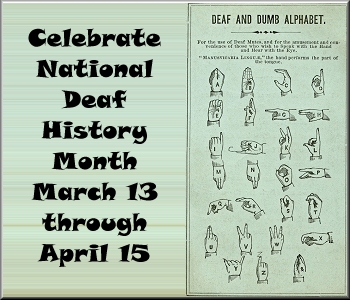
Deaf History Month covers the period of March 13 to April 15. It celebrates deaf history, particularly key events in deaf heritage.
National Deaf History Month, which begins on March 13, was originally envisioned as just one week to promote a greater understanding of the deaf community. Today, National Deaf History Month is a month long, nationwide celebration of contributions of the hearing impaired and deaf community to American society.
National Deaf History Month was the creation of two deaf employees at the Martin Luther King, Jr. Memorial Library in Washington DC. They began teaching their colleagues sign language, and these initial lessons grew into Deaf Awareness Week, celebrated and recognized by library administration.
In 1996, the National Association of the Deaf suggested the week become a full-fledged month, and in 1997, the first annual, nation-wide National Deaf History Month was celebrated, March 13 - April 15.
The mid-month start and end of National Deaf History Month is based on three historic dates. On March 13, 1988, Gallaudet University - the only university in the world exclusively for deaf students - selected their first deaf president. On April 8, 1864, President Lincoln signed a charter that allowed degrees to be granted to deaf students, and on April 15, 1817, the first permanent school for the deaf in the Western Hemisphere was established in Hartford, CT.
In the spirit of education and promoting a greater understanding of hearing loss and deafness, there are many resources available online and at local libraries. Many libraries also host events celebrating National Deaf History Month.
For more online resources about deafness and hearing loss, visit Hearing-aid.com. If you are concerned about hearing loss for you or a loved one, you can take an online hearing test or learn about the stages of hearing loss that may precede deafness.
Taken from www.prweb.com/releases/2011/3/prweb8177481.htm.
March 8 is International Women’s Day

About International Women’s Day
- When: Tuesday 8 March 2011
- Where: Everywhere
- What: International Women’s Day (8 March) is a global day celebrating the economic, political and social achievements of women past, present and future. In some places like China, Russia, Vietnam and Bulgaria, International Women’s Day is a national holiday.
- Why: Suffragettes campaigned for women’s right to vote. The word “Suffragette” is derived from the word “suffrage” meaning the right to vote. International Women’s Day honours the work of the Suffragettes, celebrates women’s success, and reminds of inequities still to be redressed. The first International Women’s Day event was run in 1911. 2011 is the Global Centenary Year.
Annually on 8 March, thousands of events are held throughout the world to inspire women and celebrate achievements. A global web of rich and diverse local activity connects women from all around the world ranging from political rallies, business conferences, government activities and networking events through to local women’s craft markets, theatric performances, fashion parades and more.
Many global corporations have also started to more actively support IWD by running their own internal events and through supporting external ones. For example, on 8 March search engine and media giant Google some years even changes its logo on its global search pages. Year on year IWD is certainly increasing in status. The United States even designates the whole month of March as “Women’s History Month”.
So make a difference, think globally and act locally !! Make everyday International Women’s Day. Do your bit to ensure that the future for girls is bright, equal, safe and rewarding.
Read on for a full history and explanation of International Women’s Day (March 8)...
February is National Senior Independence Month.
Organizing for Senior Independence | Helping Seniors Enjoy Their Independence.
February is Senior Independence Month. This is a good time to make sure that Seniors are living in spaces that work well for them.
The First Families are following a growing national trend. Both President Obama and Vice President Biden will be living with a parent in their homes. The aging of Baby Boomers and the demands of the current economic environment have driven an increase in multi-generational residences.
Another trend is for senior citizens to live independently in their own homes well into their eighties and nineties.
Whether living alone or with extended family, older adults may have specific needs and limitations that challenge them to evaluate how things are organized. Appropriately arranged space and access-friendly systems can greatly enhance independence for senior citizens whether they live alone or with others.
February is National Senior Independence Month. So it is a good time for seniors and those who love and care for them to take a look at their living quarters and determine if they are organized to promote independence.
Read on for a few things to look for when thinking about Home & Community Based Long-Term Care...
2011 - January is National Blood Donor Month.
In the US, most blood centers have difficulty keeping any more than a three-day supply of blood for transfusions. This means that the blood you donated last month is long gone. The need for blood, platelets, and plasma is constant, but only three in every 100 Americans donate blood, coming together to donate 81 million units of blood annually.
Baby boomers currently account for the most blood donations, but they are rapidly reaching the age when medications and health issues bar them from being able to donate. At the same time, they are the largest age cohort of the world population and require more donated blood for their own health, quickly using much of the supply they once supported themselves.
While some communities often have more blood than they need, others are constantly in need. The Red Cross has created a sharing program, which gives surplus to communities in need; this is particularly important in the wake of disasters. Because of the short shelf life of blood, it is crucial that citizens create a habit of blood donation.
If you were to donate blood today, it could be separated into four components, helping to save multiple lives.
Please remind your younger friends and relatives over the age of 17 to consider donating their blood, platelets, and/or plasma.
Read more about donating today and find helpful tips for sharing a life-giving donation.
2010 - December is Safe Toys And Gifts Month.
Children receive most of their toys around holiday time, but some gifts could be unsafe. According to the Consumer Product Safety Commission, in 2005 more than 200,000 toy-related injuries were reported, and nearly 8,000 of these injuries were eye injuries. Therefore, the national group, Prevent Blindness, chose December as “Safe Toys and Gifts Month.” A few guidelines you can find in the full list HERE are:
- Keep the child’s age in mind when purchasing gifts and consider their maturity level.
- Provide proper safety equipment when giving sporting goods and make sure the child uses it when playing. This gear should include helmets, facemasks and eye protection.
- Check for recalls on both new and older toys.
- Supervise playtime to ensure that your child is using toys in the correct manner. This supervision is especially important for craft supplies such as scissors, glue and pencils.
Learn more about how to purchase safe products for the children in your life at these 2 websites:
Safe Kids USA
Consumer Product Safety Commission.
November is National Alzheimer’s Disease Awareness Month and National Family Caregivers Month.
According to the Alzheimer’s Association 2010 Alzheimer’s Disease Facts and Figures report, there are more than 5 million Americans living with Alzheimer’s and as many as 10 million family caregivers. This November, during National Alzheimer’s Disease Awareness Month and National Family Caregivers Month, the Alzheimer’s Association is providing insight and support to those caring for someone with Alzheimer’s with two new resources: Alzheimer’s Association Caregiver Notebook and Alzheimer’s Association Comfort Zone.
Read On to learn more about the Alzheimer’s Association’s information resources and support groups in the Greater Illinois area.
October is Polish American Heritage Month.

Since 1608, when the first Polish settlers arrived at Jameston, VA, Polish people have been an important part of America’s history and culture.
In 2010, Polish Americans will mark the 29th Anniversary of the founding of Polish American Heritage Month, an event which began in Philadelphia, PA, and became a national celebration of Polish history, culture and pride.
During 2010, we will also mark the 231st Anniversary of the death of General Casimir Pulaski, Father of the American Cavalry.
Between the years 1892 and 1954, over two million immigrants from Poland came to America. Today, Polish Americans are the 6th largest ethnic group in the United States.
Polish American Heritage Month was first celebrated in 1981 in Pennsylvania. Michael Blichasz of Philadelphia, a fourth generation Polish American, started the celebration in an effort to bring to the forefront the strong pride he believed all Americans of Polish heritage should have in the successes that Polish Americans have made in America.
 Polish American Heritage Month is a time for festivals, parades and family gatherings.
It is a time to honor not only Polish heros and famous contributors to science, art, sports, music, and literature - but also regular Polish folk and those people who love them. It is a time to share pride in our own accomplishments as Polish Americans, non-Polish Americans and to celebrate all cultures (especially Polish culture) and heritages with the world.
Polish American Heritage Month is a time for festivals, parades and family gatherings.
It is a time to honor not only Polish heros and famous contributors to science, art, sports, music, and literature - but also regular Polish folk and those people who love them. It is a time to share pride in our own accomplishments as Polish Americans, non-Polish Americans and to celebrate all cultures (especially Polish culture) and heritages with the world.
Of course, no Polish celebration would be complete without an over abundance of traditional foods!
The three foods most commonly found at Polish celebrations are kielbasa (sausage), pierogi (dumplings) and golabki (cabbage rolls). Popular desserts include paczki (doughnuts) and makowiec (poppy seed cake).
Read On to learn more and spread the word about Polish American Heritage Month!
September 12 - 18 is National Assisted Living Week.
Established by The National Center for Assisted Living (NCAL) in 1995, National Assisted Living Week provides a unique opportunity for residents, families, staff, volunteers, and the surrounding community to come together to share with residents a variety of events and activities that show them how much we care for them.
This Year’s Theme: Living Life
You don’t have to be a rock climber, sky diver, marathon runner, or scholar to live life to the fullest. Living life means participating in activities that you enjoy and pursuing your passions, whatever they may be. It means never stopping the process of discovery or mastering talents. It means sharing your history and teaching others what you have learned. It is a lifelong pursuit of happiness and growth. We all want to live life to the fullest, no matter how old or young we are. Assisted living communities around the country are giving their residents the environment and tools they need to reach their goals. We celebrate their efforts and the residents who inspire their community.
Join this year’s National Assisted Living Week celebration and let’s live life together.
August is “What Will Be Your Legacy?” Month.

Many people do not realize how their actions affect others. They live their lives selfishly, not realizing the impact of their life choices on present and possibly future generations. What Will Be Your Legacy Month is a time for people to reflect on their past and present actions and vow to make positive changes that will affect generations. The seeds, whether positive or negative, that we plant in our children’s and grandchildren’s lives will grow and reflect our teachings.
Get your house in order, both literally and figuratively.
Tiffany deSilva (MSW, LSW, Professional Organizer) writes in her blog: Being the social worker turned professional organizer that I am, I’m concerned about the hardship that many families face when they attempt to answer the question “What do we do with our loved one’s belongings?”
Parting with a loved one’s things, or even deciding what to do with them after they are gone is an emotionally challenging process. The process is made even more difficult when the deceased loved one has a huge quantity of belongings and has not left any clues as to his or her wishes.
Families often feel obligated to hold on to everything. Sometimes, one family member gets stuck with being the keeper of everything, other times family members fight over the belongings. This is not the legacy that anyone would want to leave behind.
To make things easier for everyone, it makes sense to “get your house in order,” both literally and figuratively, before you part.
Read On for some things you can do to make things easier on your family...
July is National Recreation and Parks Month!
Celebrate, Advocate, Recreate!
Since 1985, America has celebrated July as the nation’s official Park and Recreation Month. Each July, NRPA encourages recreation facilities and parks across the country to kick-off summer programs, promote outdoor physical recreation, and pull together volunteers to make their outdoor space a thriving center of community activity.
This year’s theme is “Celebrate, Advocate, Recreate!” NRPA is encouraging members, agencies, and citizens to plan events and initiatives that remind local decision makers and the community of the exciting and vital role that parks and recreation play in the lives of Americans.
Celebrate the field. Advocate for more support. Get out there and recreate!
CLICK HERE to learn more about NRPA’s major Park and Recreation Month initiatives for 2010!
And don’t forget! When temperatures rise so high in Bond County that a HEAT ADVISORY is issued, the Bond County Senior Center serves as a cooling center from 9:00 - 5:00 weekdays.
June is AudioBook Month

June is AudioBook Month and it is sponsored by the Audio Publishers Association. This campaign reaches out directly to consumers to increase the number of audiobook listeners and generally raise awareness for the entertainment and educational benefits of the audiobook experience.
Books on audio have improved many adults’ lives. Often when adults are learning how to read, their instructor will start with the basics first. Those basics are the alphabet; what each letter looks like and sounds like. Audiobooks can reinforce those lessons when adults aren’t in the classroom. This concept is used when teaching people a second language as well.
Books on audio have also given busy adults the opportunity to listen to a book rather than sit and read. Books on audio have given people the ability to multi-task. Many enjoy audiobooks on mp3, compact disc or cassette whether commuting to work, cooking, or quilting.
For people who have special needs of any kind, books on audio can help bridge gaps. Some people are blind or have diminished vision which makes it difficult to read printed material. Some people don’t have the physical capability to even hold a book. But they can still enjoy books, magazines, and other publications by listening to them on audio.
Illinois State Library Talking Book And Braille Service
 The National Library Service for the Blind and Physically Handicapped (NLS) was established by an act of Congress in 1931, and placed under the jurisdiction of the Library of Congress.... The program in Illinois is administered by the Illinois Secretary of State. It is a division of the Illinois State Library.
Funding for the NLS program comes from federal and state taxes.
The Illinois State Library Talking Book and Braille Service plays a supporting role for the Illinois Network of Libraries Serving the Blind and Physically Handicapped.
The network consists of four library sites throughout the state known as Talking Book Centers. These libraries circulate unabridged books in audio format.
The regional center provides administrative functions, acts as a liaison with NLS, and maintains a reserve collection of braille and talking books.... As with the printed book, it has been technology that has made talking books possible and user friendly;
and it is through universal acceptance of new technology that the wonders of the talking book are available to blind and physically handicapped people of all nations. The emerging universal talking book technology has world-wide acceptance.
Nearly all countries are now using standard Phillips cassettes, either 2 or 4 track formats, and that has allowed the easy production, sale, and exchange of recorded books among all nations.
Click Here for Eligibility of Blind and Other Physically Handicapped Persons for Loan of Library Materials.
May is National Stroke Awareness Month

National Stroke Awareness Month takes place in May every year. In honor of this special time, National Stroke Association strives to provide everyone with the tools and inspiration to raise public awareness about stroke by hosting awareness events or activities. It doesn’t matter if you are an individual or a large corporation, because the more people we reach, the better.
Stroke is the third leading cause of death and a leading cause of disability in America, but many people do not realize how educating themselves and others will help reduce the incidence of stroke. We urge you to specifically educate others about how to:
- STOP stroke through risk factor management.
- Act F.A.S.T. to increase recognition of and response to stroke symptoms.
- Spread HOPE about recovery from stroke.
Are You Ready to Get Involved?
National Stroke Awareness Month is a great opportunity to educate your employees, friends, family and community about stroke. Read On for many helpful resources.
April is National Poetry Month
April has been National Poetry Month since 1996.
The Academy of American Poets in conjunction with book sellers, librarians and publishers created National Poetry month to increase visibility, accessibility and presence of poetry in America.
Expand your poetry knowledge during this special month and fall in love with poetry.
How are you going to celebrate?
Read On for some tips for you to commemorate National Poetry Month..
March is National Women’s History Month

The overarching theme for March 2010 is Writing Women Back into History
In 2010, in celebration of The National Women’s History Project’s 30th Anniversary, they are also highlighting themes from previous years. Each of these past themes recognizes a different aspect of women’s achievements, from ecology to art, and from sports to politics.
The history of women often seems to be written with invisible ink. Even when recognized in their own times, women are often not included in the history books.
National Women’s History Month provides an excellent venue to recognize and celebrate women’s historic achievements as well as an opportunity to honor women within our families and communities. What will you do to celebrate National Women’s History Month?
For more information about National Women’s History Month, visit www.nwhp.org.
February is AMD/Low Vision Awareness Month

"Don’t Lose Sight” National Campaign Aimed to Educate Americans about Macular Degeneration
More than 15 million Americans are affected by macular degeneration, a leading cause of blindness and severe vision loss for people 50 and older. Actress Jane Seymour has partnered with Prevent Blindness America (PBA), the nation’s leading volunteer eye health and safety organization, to announce “Don’t Lose Sight” – a movement to educate adults ages 40-69 about their risk for macular degeneration.
In a recent study conducted by Prevent Blindness America, 96 percent of Americans believe that vision retention is important to overall quality of life. However, nearly 40 percent of people are unaware that a disease like macular degeneration exists and can be responsible for vision loss.
“Macular degeneration gradually destroys the sharp, central vision needed for reading, driving, identifying the face of a loved one, watching television, reading and performing other daily tasks,” said Dr. Michael Cooney, a New York City ophthalmologist who has done extensive research into eye health and macular degeneration. “In some cases, macular degeneration advances so slowly that people will see little effect on their vision as they age”
Low vision aids can make the most of remaining vision. Information on eye disease warning signs and treatment is available through Prevent Blindness America.
2010 - January is National Mentoring Month
Become a Mentor
To be a mentor, you don’t need special skills, just an ability to listen and to offer friendship, guidance and encouragement to a young person. And you’ll be amazed by how much you’ll get out of the experience.
Mentoring happens in a number of settings:
- The community.
- Schools.
- The faith-based community.
- Business.
- Through the Internet.
For more information about these settings and to find mentoring opportunities in your area Read On...
Get Invoved in Senior Corps
Americans over 55 have a lifetime of experience to share, and the desire to make a real difference in their world. They’ve managed households, been business owners and nurses, farmers and salespeople, artists and executives. Now they are ready to put their unique talents and expertise to work in their communities, and enrich their own lives in the process.
Senior Corps connects today’s over 55s with the people and organizations that need them most. We help them become mentors, coaches or companions to people in need, or contribute their job skills and expertise to community projects and organizations. Conceived during John F. Kennedy’s presidency, Senior Corps currently links more than 500,000 Americans to service opportunities. Their contributions of skills, knowledge, and experience make a real difference to individuals, nonprofits, and faith-based and other community organizations throughout the United States.
Read On for several ways to get involved...
MLK Day has become a traditional Day of Service to your community.

On January, 18, 2010, people of all ages and backgrounds will come together to improve lives, bridge social barriers, and to move our nation closer to the “Beloved Community” that Dr. King envisioned. Dr. Martin Luther King devoted his life’s work to causes of equality and social justice. He taught that through nonviolence and service to one another, problems such as hunger and homelessness, prejudice and discrimination can be overcome. Dr. King’s teachings can continue to guide us in addressing our nation’s most pressing needs---poverty, economic insecurity, job loss and education.
Volunteer with Americans across the nation on the 2010 King Day of Service and make a real in difference in your community.
Plan a King Day project!
2009 - December is the ultimate holiday and observation month.

When it comes to holidays in December, everyone immediately thinks of the big ones: Christmas, New Year’s Eve, Hanukkah, and Kwanzaa.
But what else is going on in this last month of the year? Here’s a list of well-known and not so well-known holidays and observances in December 2009.
Christmas 2009: December 25, and Christmas Eve 2009: December 24
This year, Christmas falls on a Friday, and Christmas Eve, which is a day off for many people, falls on a Thursday.
This means an extra long weekend to celebrate with family and friends (and a whole weekend to stop by the stores for returns and after-Christmas sales).
And poor Santa and the elves will have the whole weekend to rest before starting the post-Christmas workshop inventory.
New Year’s Eve 2009: December 31
New Year’s Eve also falls on a Thursday, followed by New Year’s Day on a Monday. This means two long weekends in a row. Not a bad way to end one year and start a new one.
Hanukkah 2009: December 11 to December 18
 This year, Hanukkah begins and end right int he middle of December, significantly before the Christmas festivities begin. Like all Jewish holidays, Hanukkah begins and ends at sundown.
The festival lasts for eight days and eight nights, and Jewish children typically receive a small gift on each of the eight nights. Want to know more? Here are some frequently asked questions about Hanukkah.
This year, Hanukkah begins and end right int he middle of December, significantly before the Christmas festivities begin. Like all Jewish holidays, Hanukkah begins and ends at sundown.
The festival lasts for eight days and eight nights, and Jewish children typically receive a small gift on each of the eight nights. Want to know more? Here are some frequently asked questions about Hanukkah.
Kwanzaa 2009: December 26 to January 1, 2010
Kwanzaa, a week-long African-American celebration of the values of family, community responsibility, commerce, and self-improvement, always begins the day after Christmas and ends on New Year’s.
This year, the celebration begins on a Saturday, which will lend itself well to Kwanzaa celebrations.
Want to know more about these holidays? Read more...
November is American Diabetes Month!

November is American Diabetes Month - a time to shine a spotlight on a serious disease that leads to potentially life-threatening complications such as heart disease, stroke, kidney disease, blindness, and amputation.
This year, we need to take a bolder, more audacious approach to American Diabetes Month. Consider that:
- 24 million children and adults in the United States live with diabetes
- million Americans are at risk for type 2 diabetes
- 1 out of every 3 children born today will face a future with diabetes if current trends continue
October is Family History Month!
10 Ways to Celebrate Family History Month
Projects to Explore and Preserve Your Family Heritage
By Kimberly Powell, About.com
October is designated in many U.S. States as “Family History Month,” and genealogists everywhere have adopted the month as their own. Whether you’re new to genealogy, or have devoted a lifetime to it, celebrate Family History Month with your family this October by trying one (or more) of these ten wonderful ways to craft and commemorate your past.
Get Started Tracing Your Family Tree
If you have been curious about your family tree but just aren’t sure where to start then you don’t have any more excuses. Here is a great collection of resources and simple advice on how to get started researching your family tree both on and off the Internet.
First Steps: How to Trace Your Family Tree
Free Family Tree Charts
Uncover Your Family Health History
Also known as medical genealogy, tracing your family health history is a fun, and potentially lifesaving, project.
Experts state that about 3000 of the 10,000 known diseases have genetic links, and that many diseases "run in families," including colon cancer, heart disease, alcoholism, and high blood pressure.
Creating a family health history can be a useful tool to aid you and your medical care provider in interpreting patterns of health, illness and genetic traits for you and your descendants.
What you learn now could potentially save a family member’s life tomorrow.
Tracing Your Family Medical History
Nature vs. Nurture: Are We Really Born That Way?
Read on for more Family History projects!
September is Healthy Aging Month!
Begin Your Training for Your Older Years Now!
September is Healthy Aging Month is an annual health observance month designed to focus national attention on the positive aspects of growing older.
The month, created by Educational Television Network over 15 years ago, is part of the Healthy Aging, a national, ongoing health promotion designed to broaden awareness of the positive aspects
of aging and to provide inspiration for adults, ages 50-plus, to improve their physical, mental, social and financial health.
In an effort to draw attention to the needs of the growing numbers of older adults, the month was developed to offer a second month on the calendar in addition to May is Older Americans Month.
September was chosen as a time when many people think about getting started on new tasks after the summer. Drawing on the “back to school” urge embedded in everyone from childhood,
the observance month activities are designed to encourage people to rejuvenate and get going on positive health measures. These measures include physical, social, financial and mental wellness.
What can you do to celebrate September is Healthy Aging Month? Get in training now for your positive older years... Begin this month to take more personal responsibility for your own health.
Read On for some ideas...
July 3 - August 15 are Air Conditioning Appreciation Days
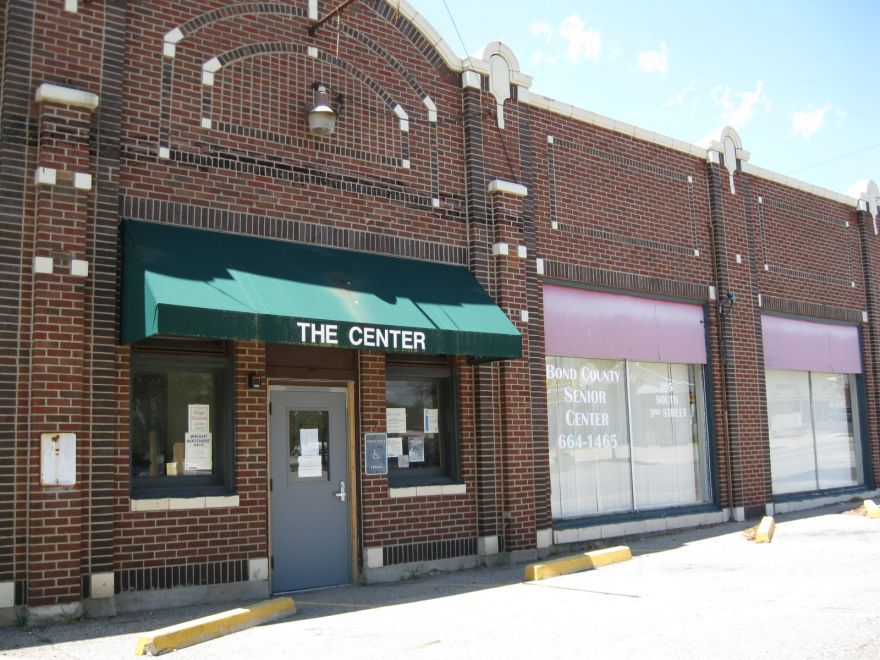
The arrival of summer’s sticky, steamy weather is a reminder that July 3 through August 15 is designated “Air Conditioning Appreciation Days,” so don’t forget to give your cooling equipment some tender loving care before the “dog days of summer” turn into scorchers.
The Air Conditioning and Refrigeration Institute’s (ARI) guidelines give homeowners suggestions to help keep central air conditioners working properly, which can reduce energy costs, head off expensive repairs and protect families from killer heat waves like the kind that took thousands of lives last year in Europe and India.
“Proper maintenance of your air conditioner can help you beat the summer heat and conserve electricity,” says William G. Sutton, president of ARI.
“However, if your air conditioner or heat pump gives you problems that seem too expensive to fix, consider a replacement. Newer equipment on average is about 50 percent more energy efficient than equipment manufactured 25 years ago.” Read on for tips on how to keep cool this summer...
And don’t forget! When temperatures rise so high in Bond County that a HEAT ADVISORY is issued, the Bond County Senior Center serves as a cooling center from 9:00 - 5:00 weekdays.
June is Adopt A Shelter Cat Month
Approximately 4 million cats end up in shelters every year.
One of them is sure to be a perfect match for you!
Each year, thousands of kittens are born during spring and summer -- and many end up in animal shelters, waiting for loving homes. To promote adoptions of these playful, affectionate animals, American Humane celebrates Adopt-A-Cat Month in June. Come visit the fabulous felines at your local animal shelter, and take home your new best friend!
[ Keep reading for more information about how a cat companion will improve both his and your life ... ]
ASPCA’s Adopt-A-Shelter-Cat Month Resources
At the ASPCA, it’s all shelter cats, all the time. But the month of June is extra special—it’s Adopt-A-Shelter-Cat Month! Read on for cat care tips, this year’s photo contest theme and profiles of some of our favorite shelter cats—then make your way to your local shelter and meet the feline of your dreams!
May is National Bike Month
Bicycles For Aging Baby Boomers
Fun, fitness and easy on the joints are the reasons more and more baby boomers are turning to
cycling than ever before. But what makes a good bike for boomers? While there are lots of hard-core,
50-plus cyclists out there, most older riders are more interested in a leisurely ride on the comfy
side. That’s why manufacturers are making a line of “comfort” bikes -
feel-good alternatives to the high-performance road bikes and nubby-tired mountain bikes.

Comfort bikes let you sit upright which eases lower-back strain; they come with big tires that
ensure a smooth ride; have raised, swept-back handlebars to reduce pressure on the wrists and hands;
and offer oversize seats to eliminate saddle soreness.
[ Keep reading for a closer look at some different boomer-friendly styles... ]
May is also Older Americans Month
“Living Today for a Better Tomorrow”
Each year the Administration on Aging (AoA) issues a theme for Older Americans Month to assist their National Aging Services Network of state, tribal, area agencies on aging, and community services providers plan for activities that might take place in May or throughout the year. This year’s theme “Living Today for a Better Tomorrow” reflects AoA’s continued focus on prevention efforts and programs throughout the country that are helping older adults have better health as they age and avoid the risks of chronic disease, disability and injury.
2009 - April is National Garden Month
“When You Garden, You Grow!”
Gardening is an activity you can enjoy from childhood through retirement. While your gardening style may change over time, your love of gardens and plants probably won’t. Sharing your wealth of knowledge and skills with young people is a great way to stay active and engaged. Intergenerational gardening has other benefits, too. Young people learn how to grow their own food and flowers — a lifelong gift they can use to improve their quality of life at home and in the community. They also glean wisdom from and nurture a relationship with an older adult. Older gardeners get physical assistance that may keep them active longer. Plus, a young gardening friend may nurture an older gardener’s creativity or sense of adventure by suggesting new ideas or asking to try unusual plants. Intergenerational gardening is a win-win activity for everyone! [ Read More... ]